Friday 5th August (Day 6)
It’s a shame to leave Prague, but I am looking forward to seeing Berlin. The wall is one of the things on the 70 B4 Seventy list, hence the reason Berlin is part of the trip. But first, we need to get there, and one of the only modes of transport we are yet to use on this trip is a train. So, we are making the trip from Prague to Berlin by rail, via Dresden, following the Vltava then Elbe Rivers.
Having packed our bags yesterday it was just a matter of getting up, breakfasting, showering and getting a Bolt to the station. Fortunately it went as smoothly as that, and we were at the station with more than enough time up our sleeves. As always, it was as familiar as any railway station anywhere in the world and we were on the train and on our way right on time. We pre-purchased our tickets a few weeks back and somehow or another ended up in seats not allocated together. Fortunately the other traveller seated between us was happy to take the single seat, so we were able to sit together. We were seated in a group of 4 seats, 2 facing the other 2, and by sheer coincidence the other 2 people were Aussies! Hungover, loud, foul mouthed but friendly enough Aussies. Just our luck!
The trip itself was very nice. We bought first class tickets, so we had a comfy seat, usb, wifi and dining car access close by. I sat by the window and enjoyed watching the river go along. It was very pretty, with villages, mountains, castles and people. The trip took 4 hours but it didn’t feel like it. I am glad we took the train rather than heading to an airport, doing the whole security thing, boarding, getting air sick, and then reversing it all to get off again. It also gave us the opportunity to book a walking tour of Berlin for tomorrow, to kick us off and get our bearings.
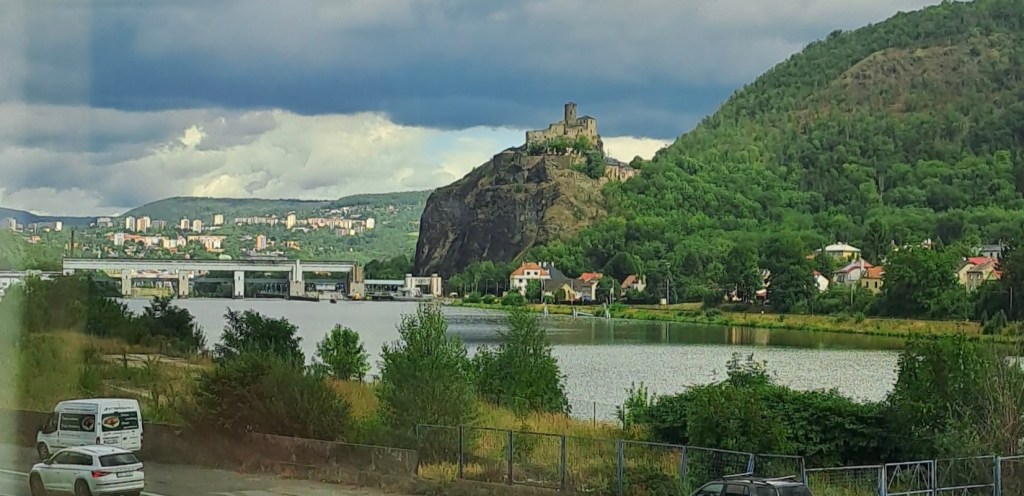
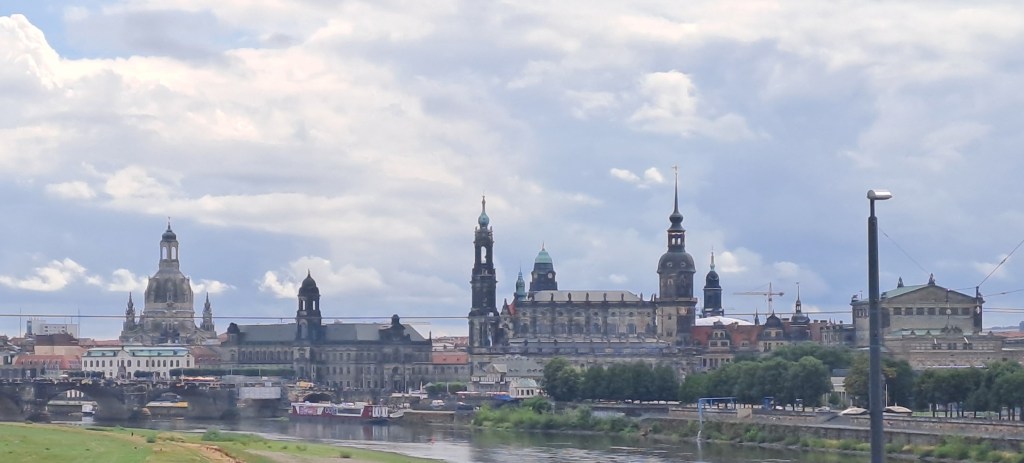
Arriving in Berlin was also easy, although the station is much larger than the one in Prague. We quickly got out onto the street and into a taxi and straight to our accommodation. It’s a cute little apartment that will be fine for us, given we are rarely inside.
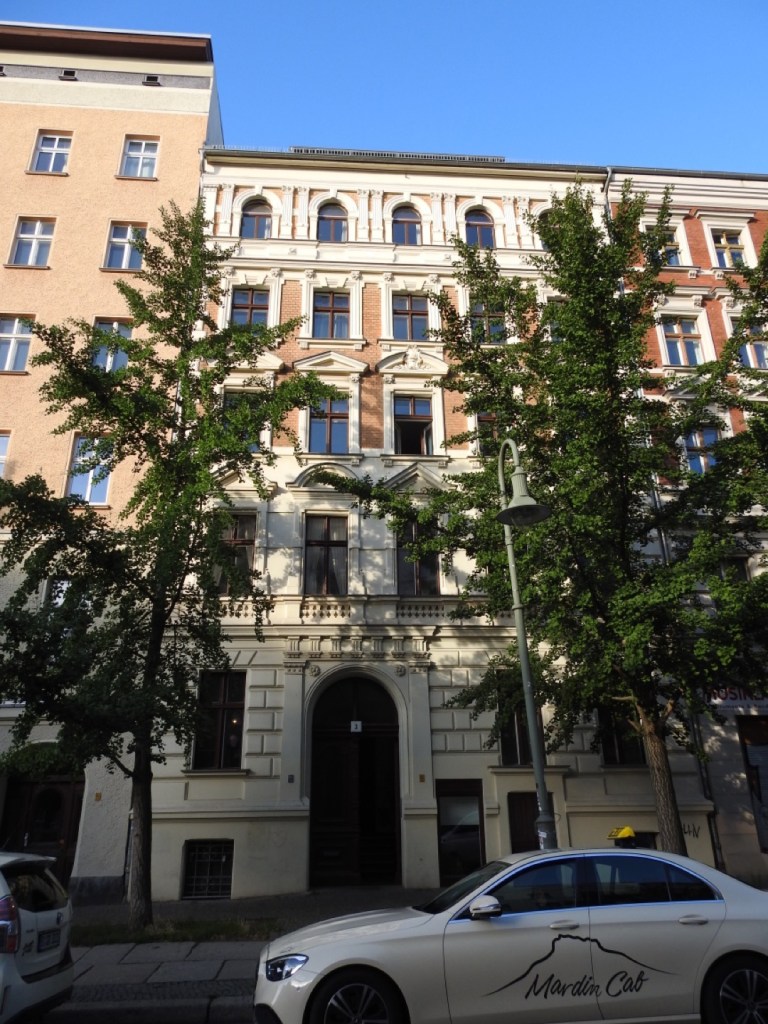
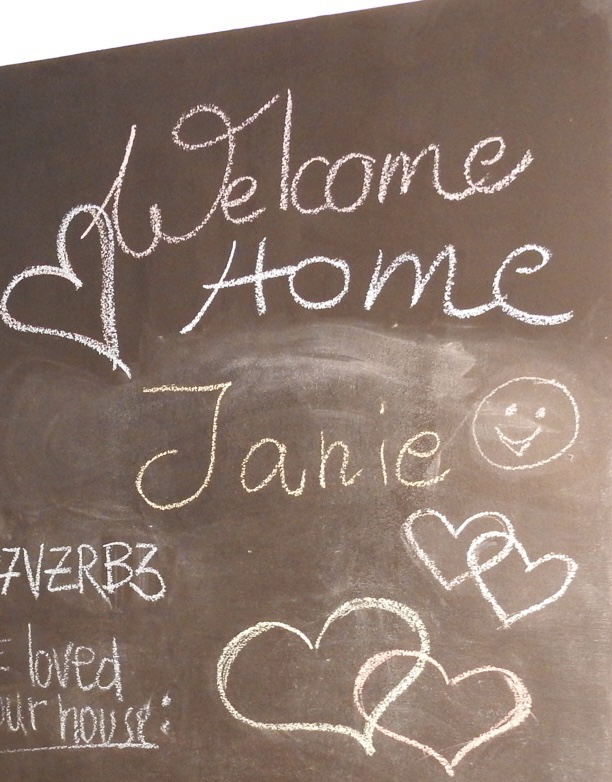
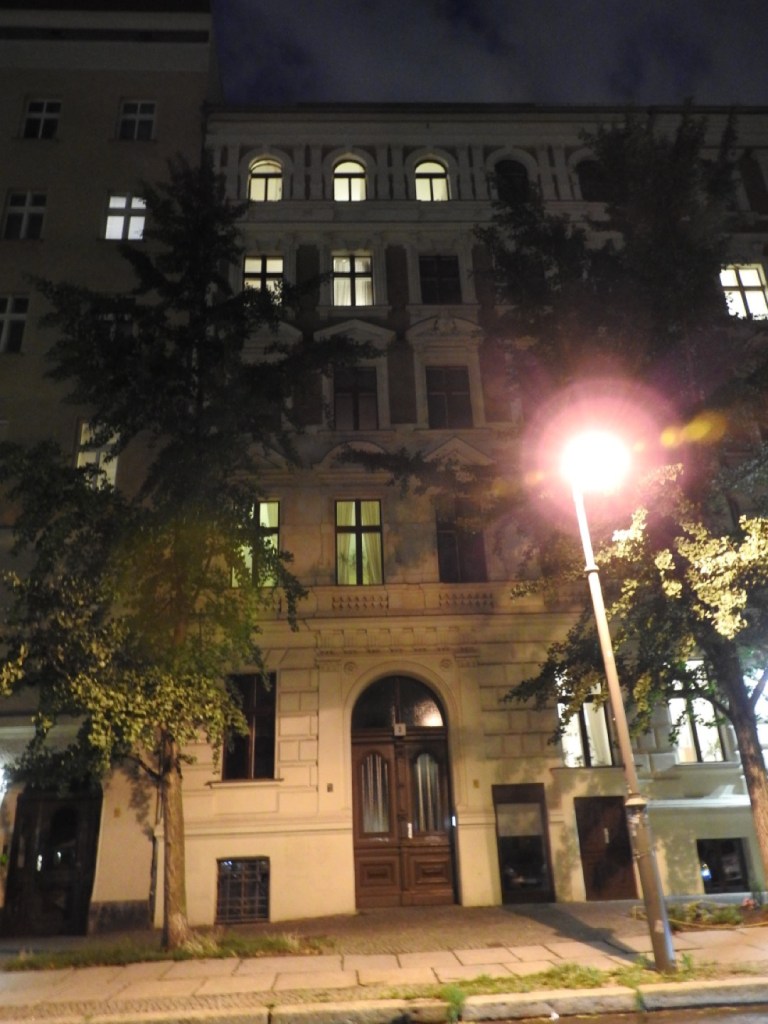
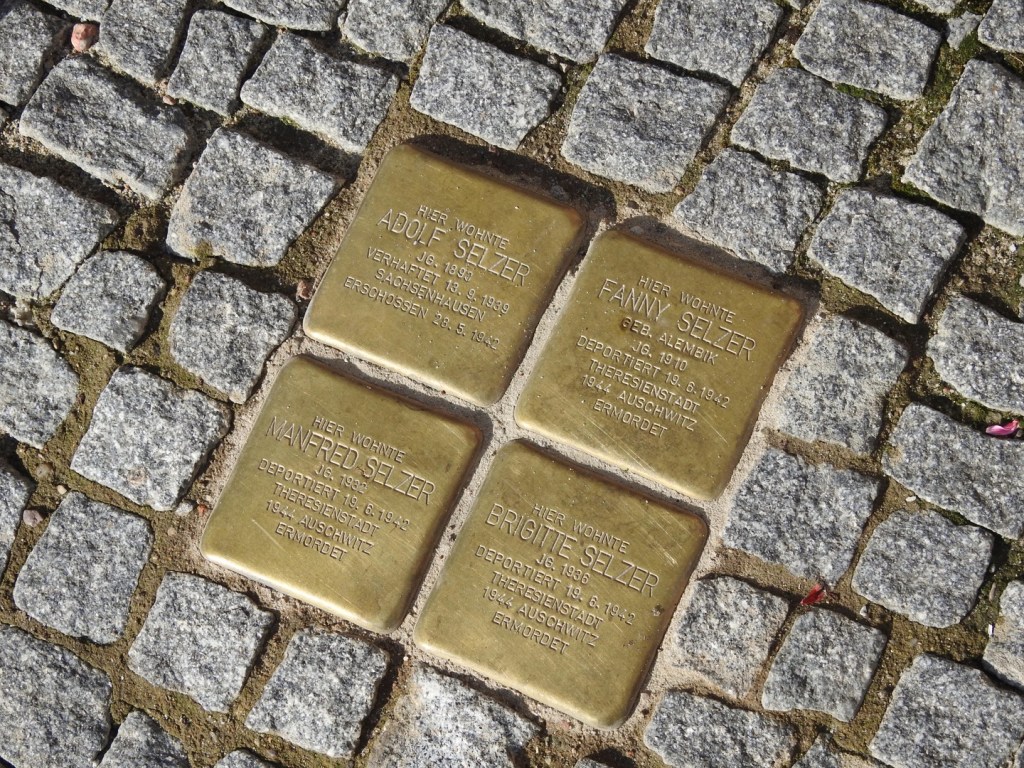
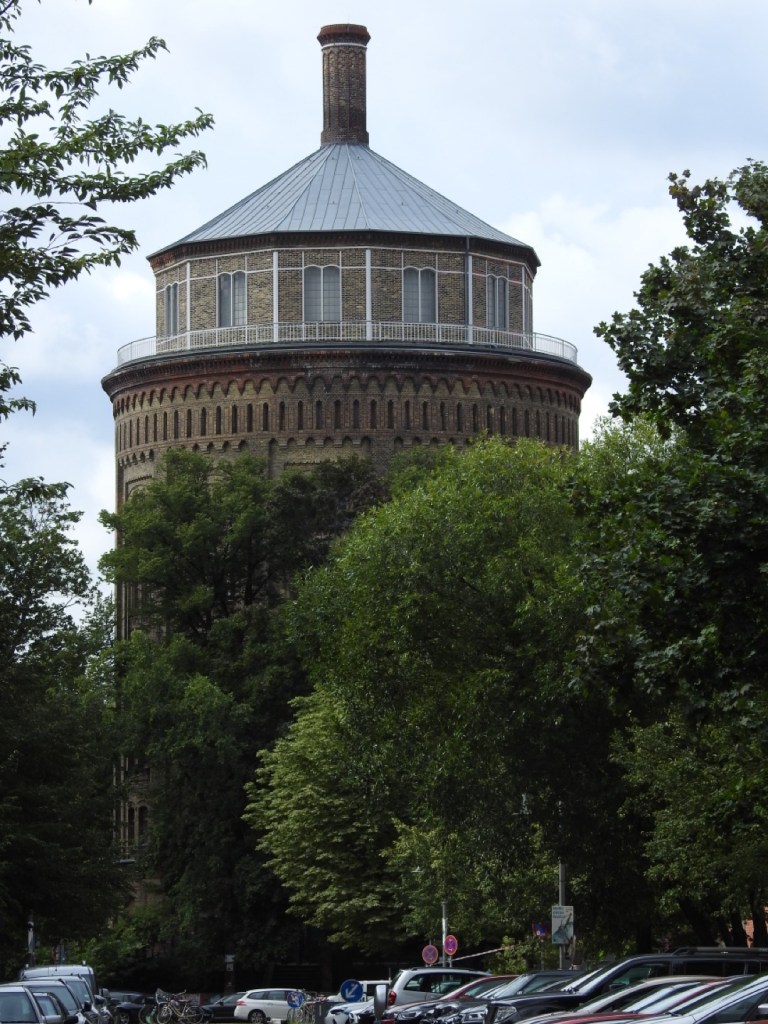
After using the facilities we headed up to the supermarket and stocked up on supplies, before putting on our walking shoes and heading out. A quick look at the map suggested there might be a few things worth seeing. So, we walked along “our street”, past Berlins oldest water tower, and around to the Kulturbrauerei (literally “Culture Brewery”). Not far from home I noticed some interesting gold coloured plaques in the cobbled footpath. The direct translation is ominous. I hope we find out what they are about and how they got there.
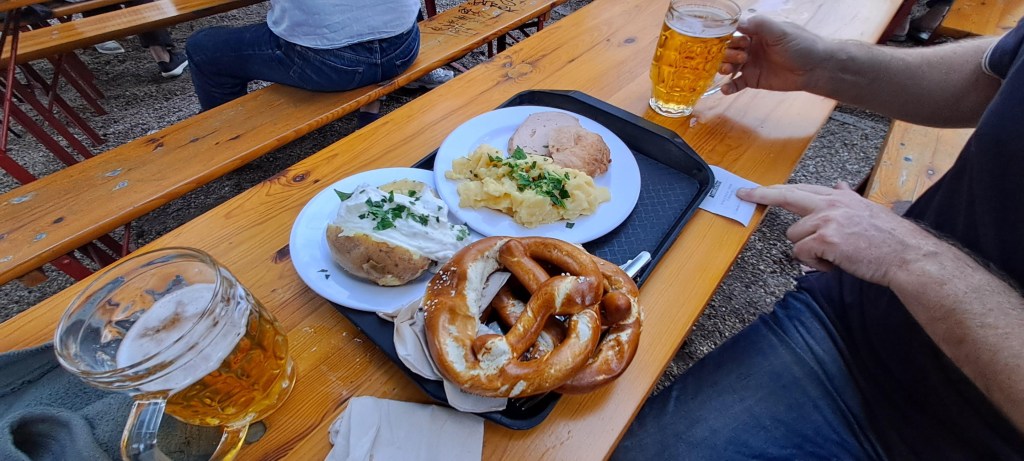
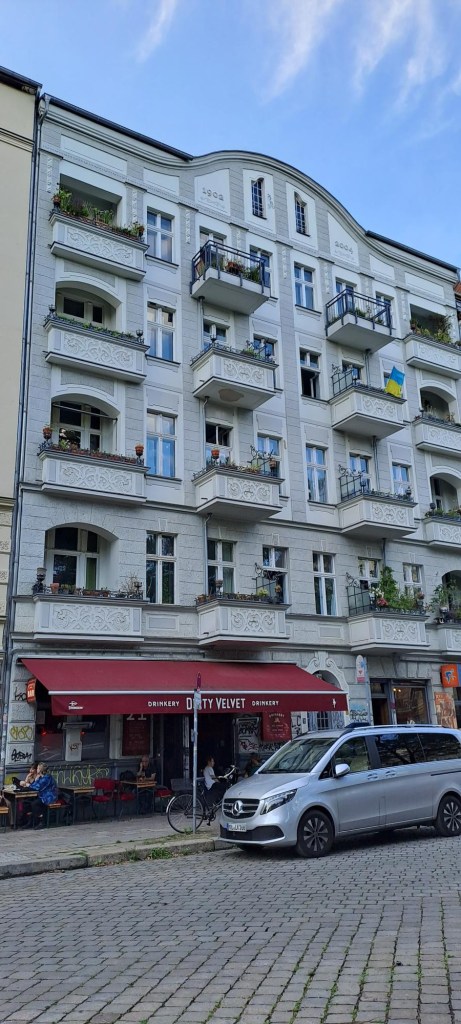
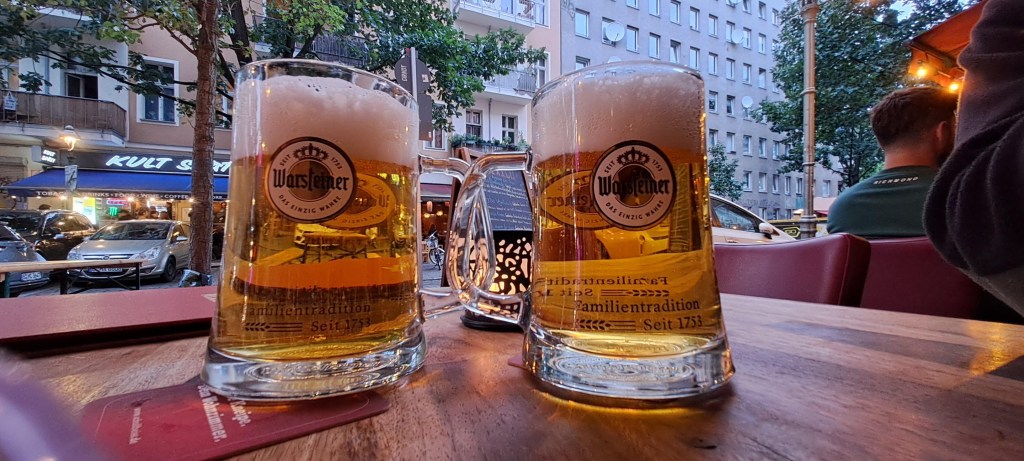
A bit more walking and we came across the Dirty Velvet Drinkery, offering a happy hour, 2 for 1. A drinkery! Spell check tells me this is not an English word. I think it should be. After drinking at the drinkery we wandered up to the local beer garden for another drink and some potato- and bread-laden food, before walking home to bed. My cold is definitely on its way out, but it’s knocked me for six. Here’s hoping tomorrow it’s all gone at last.

Saturday 6th August (Day 7)
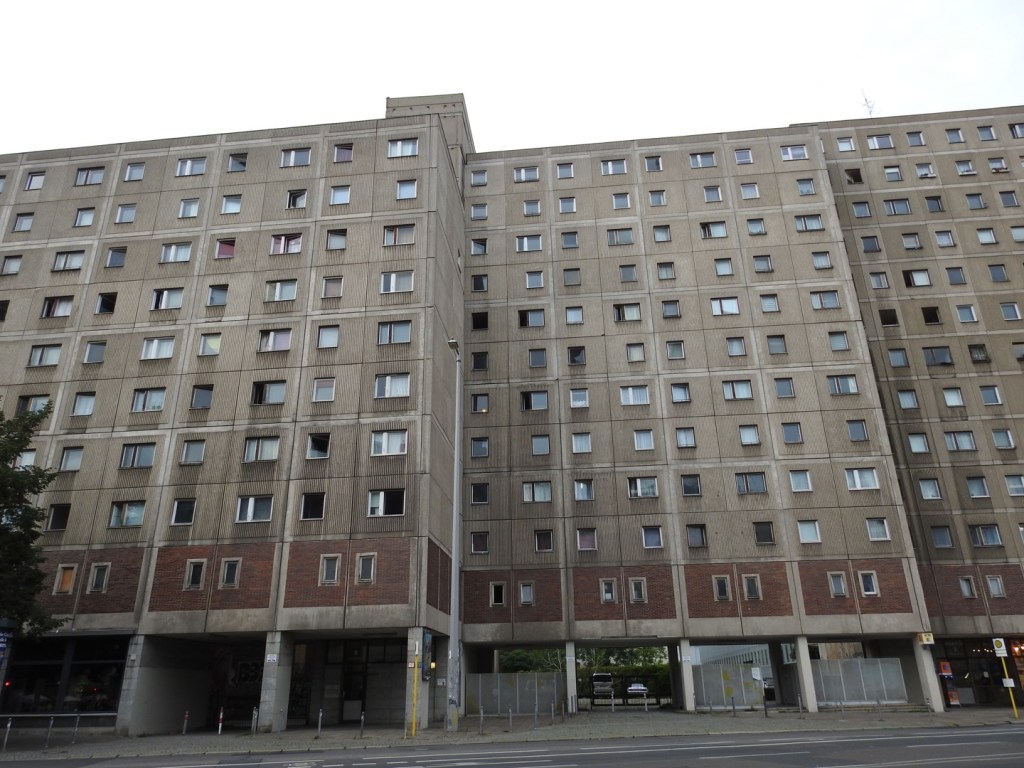
Another good night’s sleep and another day closer to being free of this lingering head cold. Overnight I’ve processed a lot of information, realising what it means to be staying in an apartment in the former East Berlin. People lived in this building, in this apartment, whose lives and movements were restricted in so many ways. Today we are heading in to the city to do a walking tour, which may answer some of the many question I have about Germany, East and West Berlin and their histories. We decided to walk from the apartment into the city, about 2 kilometres and set off about 10ish. The walk was in a straight line and took us past many communist looking buildings, the type that we saw on TV as I was growing up. So much to process. Once we were in the city, we found a big square with an old church dating back to the 1200s and largely undamaged during the war. We had a short walk around the square before we headed over for coffee that was far too expensive (minimum eftpos spend €10) and a look around the Hackescher Markt.
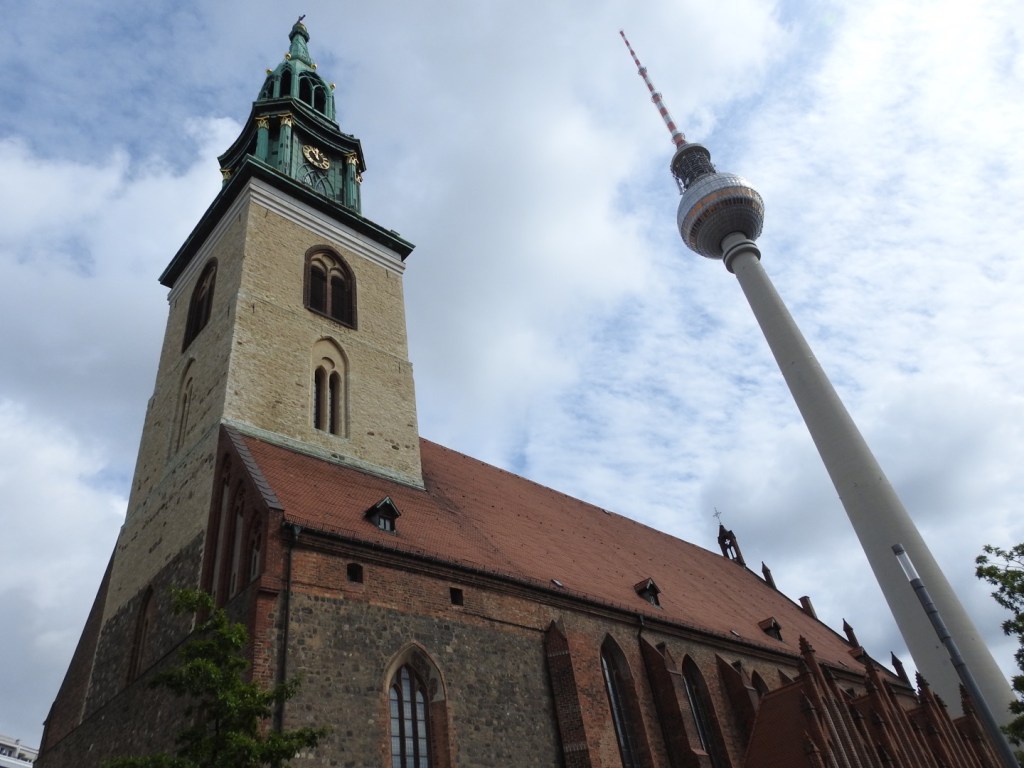

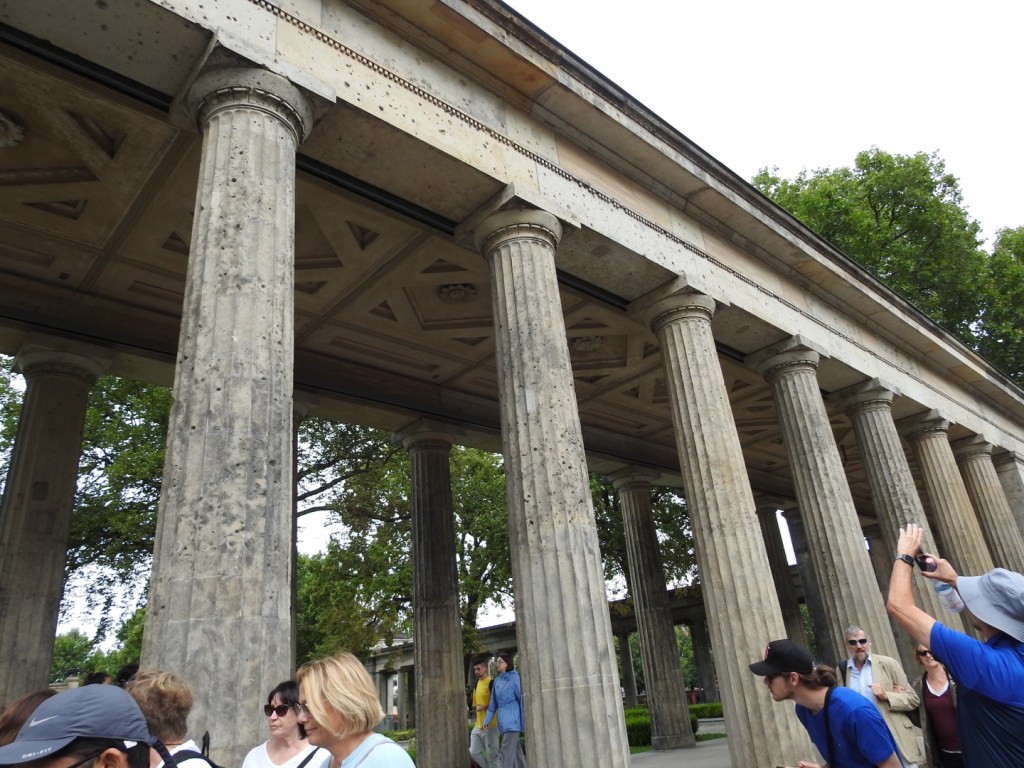
Then it was time to meet our guide, Jimmy a northern Englishman living in Berlin and knowledgeable about its history. Our tour started with the earliest known information about the place now called Berlin, which corresponded with what we just read about the old church. Jimmy explained that “Germany” is a young country with a long history preceding it. As we walked onto Museum Island, we were into the last 200 years, as he explained the 5 museums that make up the UNESCO world heritage area. I did wonder as he talked, how many of the artefacts in the museums are “stolen”. It makes me reluctant to go and look at things that may not be there with the permission of the folk they belong to. I should say, the same applies to museums around the world …

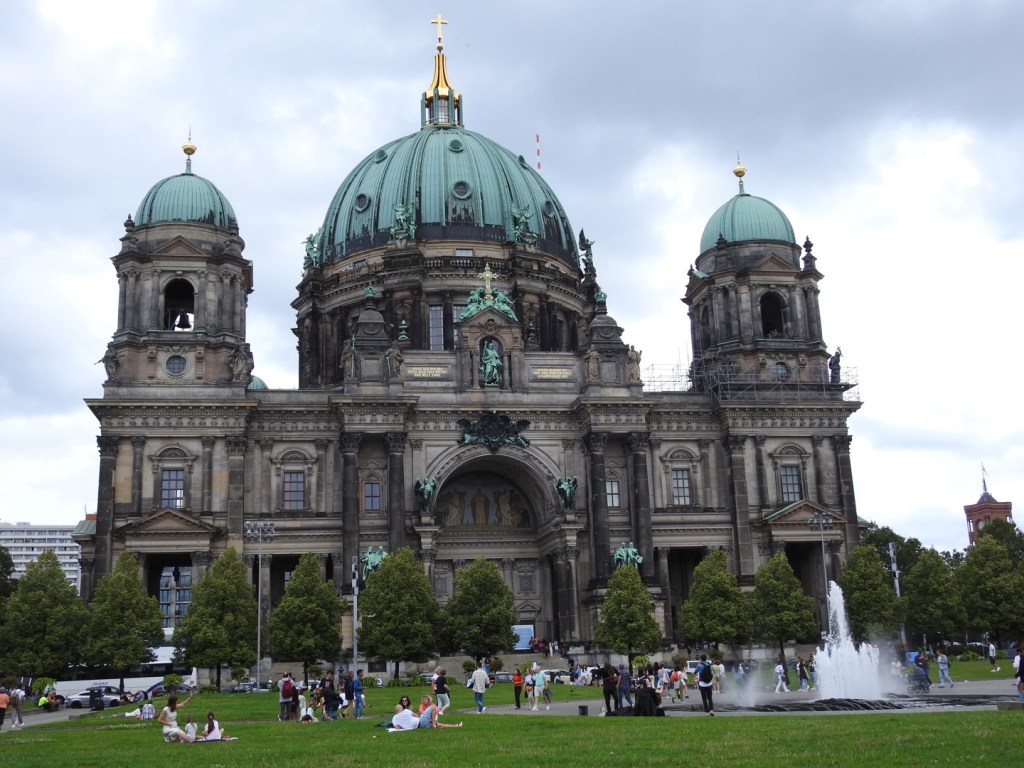
Our next stop was to admire the beautiful Berlin Cathedral from the outside, before we wandered over to the Central Memorial of the Federal Republic of Germany for the Victims of War and Dictatorship. This one makes you catch your breath. There is a woman with her dead son draped over her knee, sitting alone in a cold space, with an open roof above her. The rain, snow, sun and light can all fall upon her. Heartbreaking to think how many women have been in her position over millennia around the world. I doesn’t matter what “side” you are on when your son goes to war and doesn’t come home.

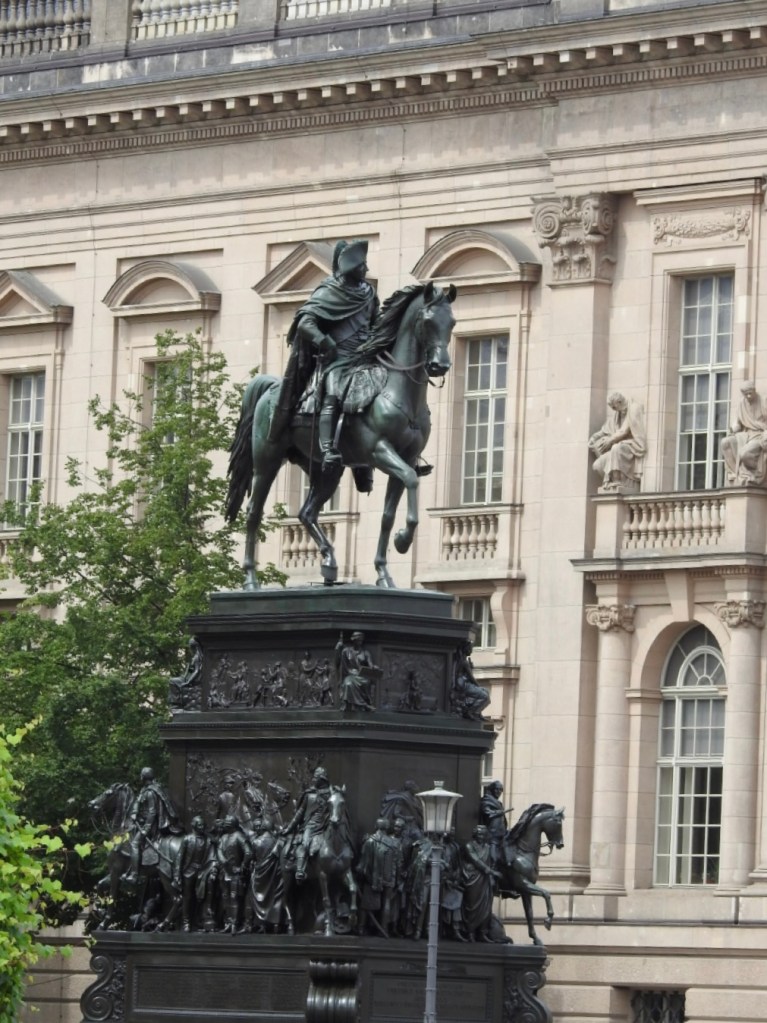
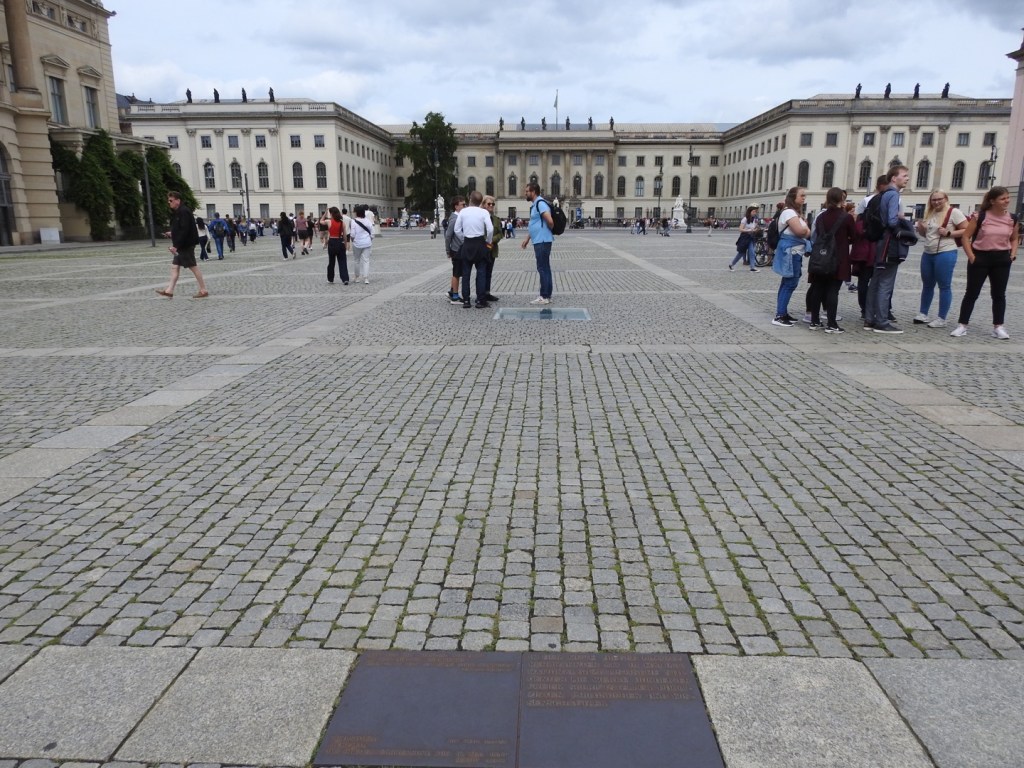
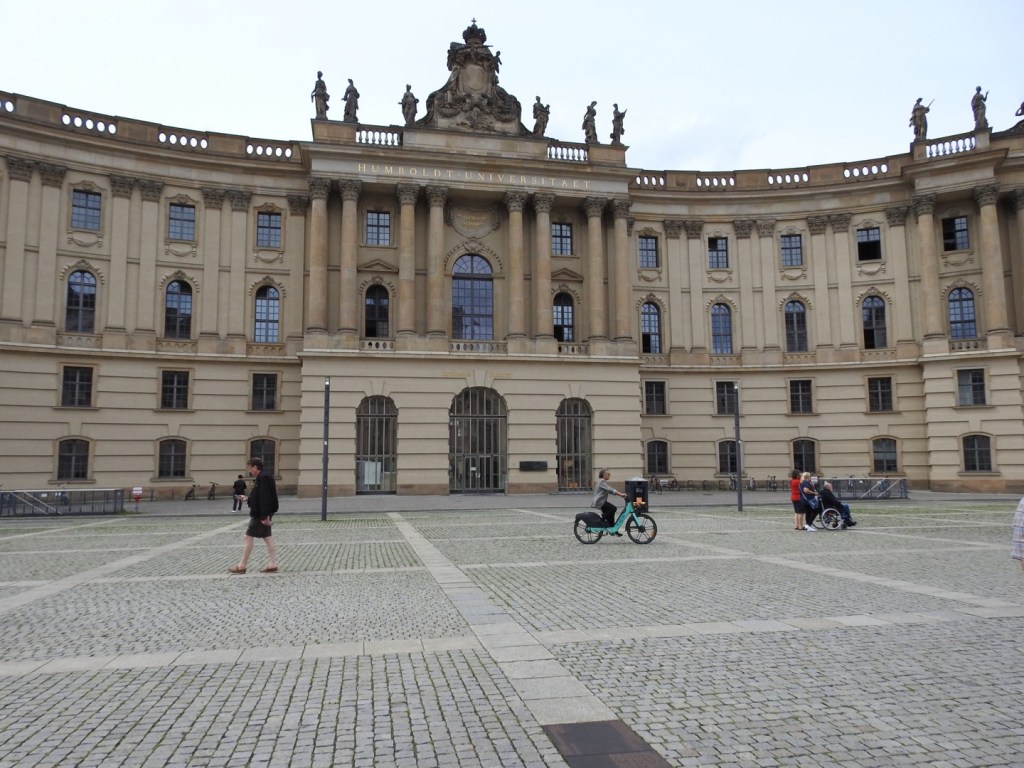
The next stop on the tour was the Bebelplatz. Here Jimmy kept up his description of the history of Berlin, with us up to the bit that sees Jews and others start to be persecuted by the Nazis. We stood in the very spot where all the books were brought to and burned. They burned books! We also heard all about Fredrick the Great and his life and influence on the city. Poor fellow would not have survived Nazi Germany (he was gay), but would be well accepted now!
On a lighter note, we next stopped at the Ampelmann Store. Ampelmann is the wee fellow that tells us if it is ok to cross the road or not. Like at home, he is red or green, for stop or go, but here he is more of a cartoon fellow than our serious icon. Anyway, he was an East Berliner, and one of the only things that people wanted to keep! He is iconic here and is now used throughout Germany and other countries. He has his own brand now, with t-shirts and other branded merch available. Very capitalist for a wee communist fellow.
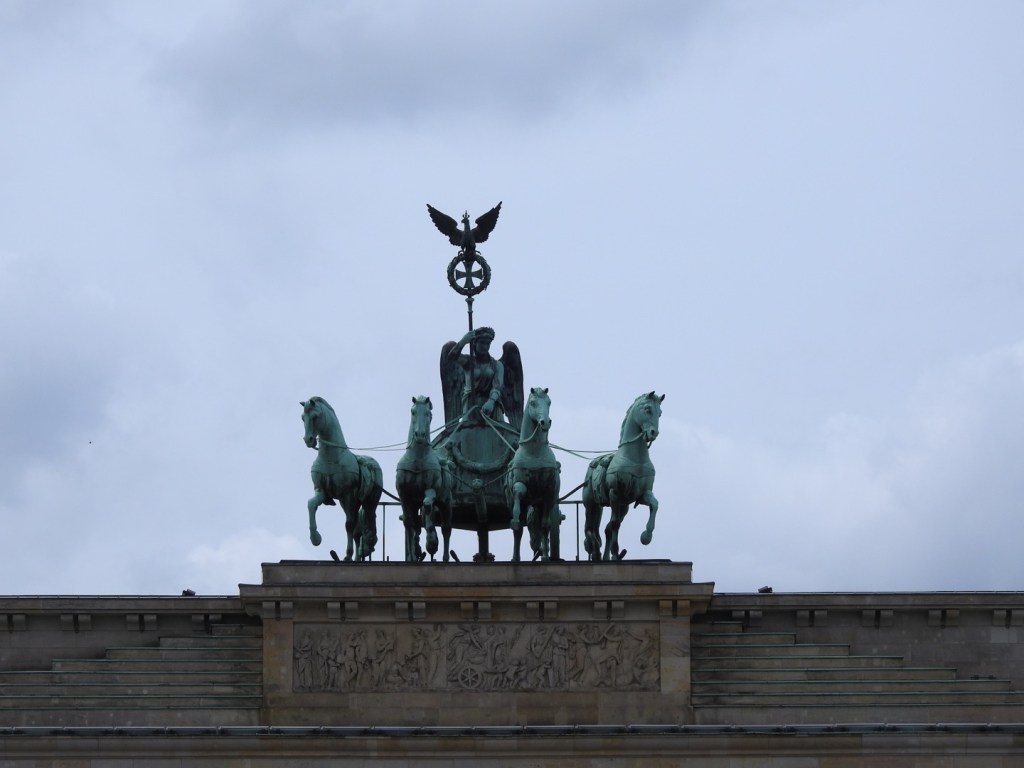
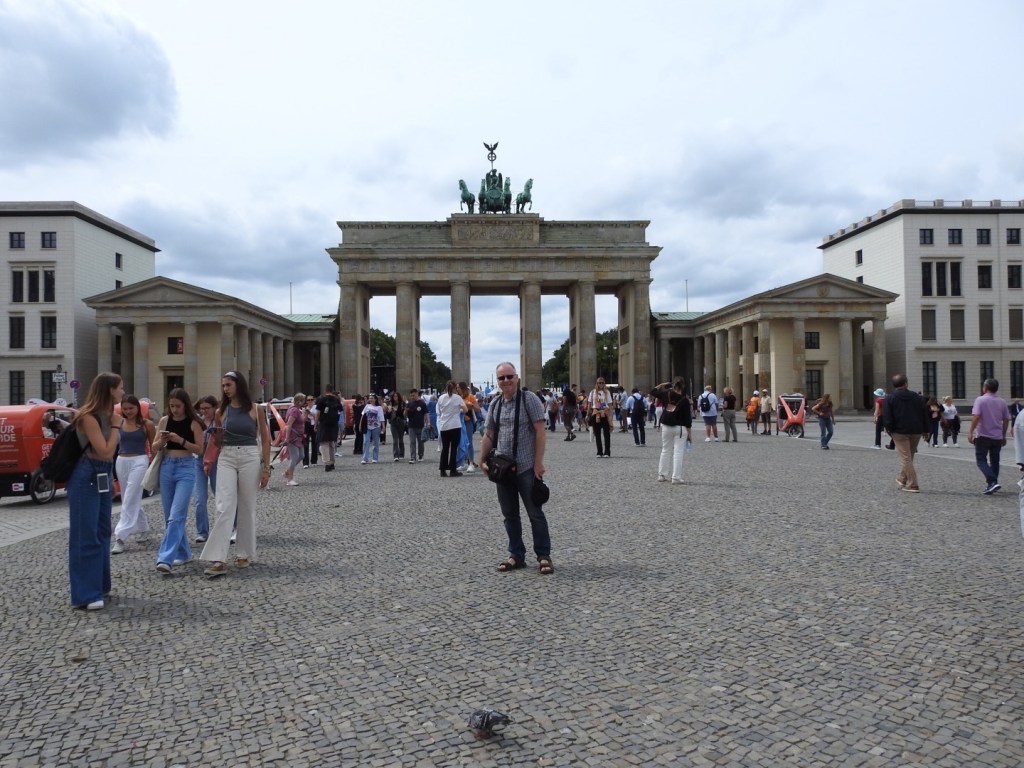
Onwards, our next non-stop was past the Russian embassy! It’s huge and obviously flies the Russian flag. We were advised not to overtly photograph it (but who wants to anyway?). I have to wonder who works there? Surely they are all Russians, brought here and possibly even living within the walls of the embassy. A little irony there if that is what is happening! The embassy is close to the Pariser Platz, the home of the American and French embassies as well as the Brandenburger Tor, the Brandenburg Gate. A good spot to grab a drink, take a rest and watch the world go by. It seems the gate is the place to protest. There were at least 3 underway as we were there, one for Falung Gong, one for Assange and another attracting much police attention. It’s amazing to think that Napoleon rode through that gate! It’s also amazing to think that it sat alone in the death strip for the 28 years of the wall’s existence. It’s one of those places you could never get all to yourself, unless it sat in the death strip or it was COVID times. We shared it with a squillion other folk and a pigeon.
It was here that the mystery surrounding the gold plates set into the ground that we saw last night near our house, was solved. They are called Stolpersteine (stumbling stones) and are a project initiated by German artist Gunter Demnig. Families of people who were a victim of the holocaust can ask the artist to create the stone and embed it at their last known address. He makes a plate for each person, and personally goes to the address and places the plate himself. He has made and installed more than 100,000 across Europe!
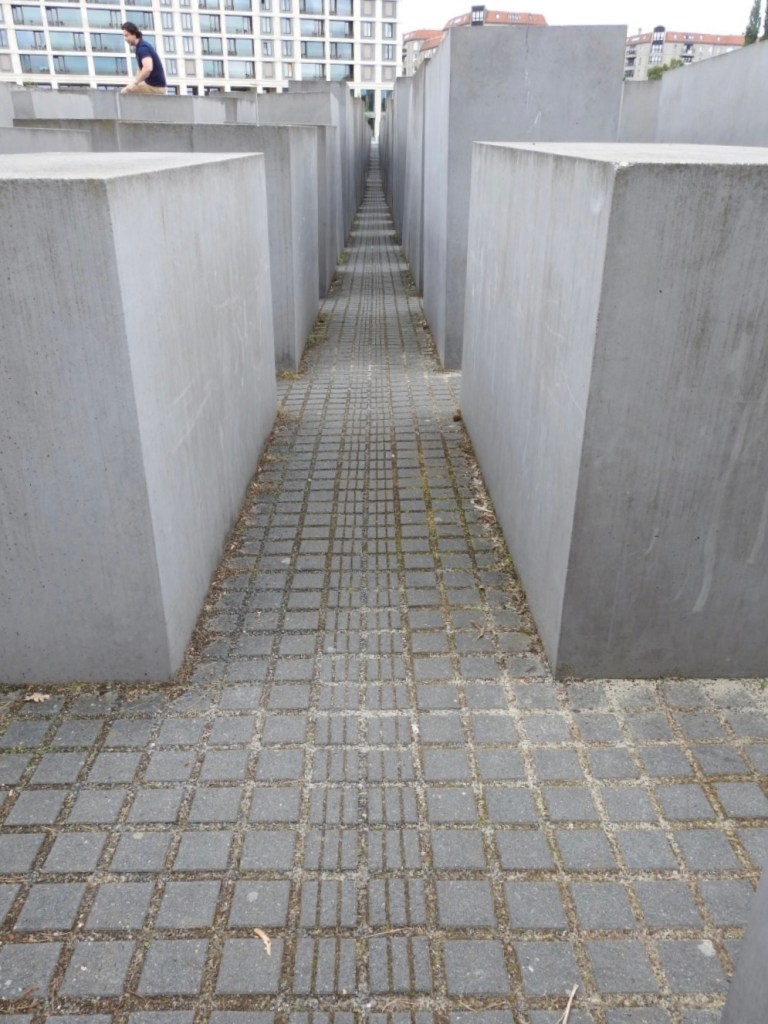
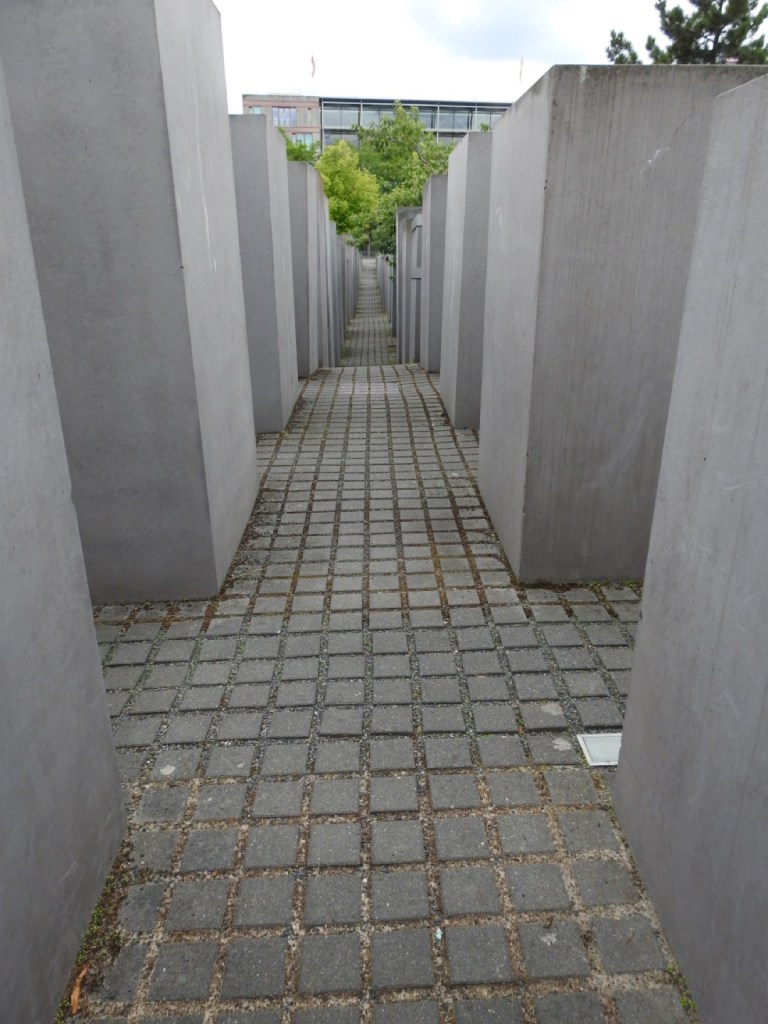
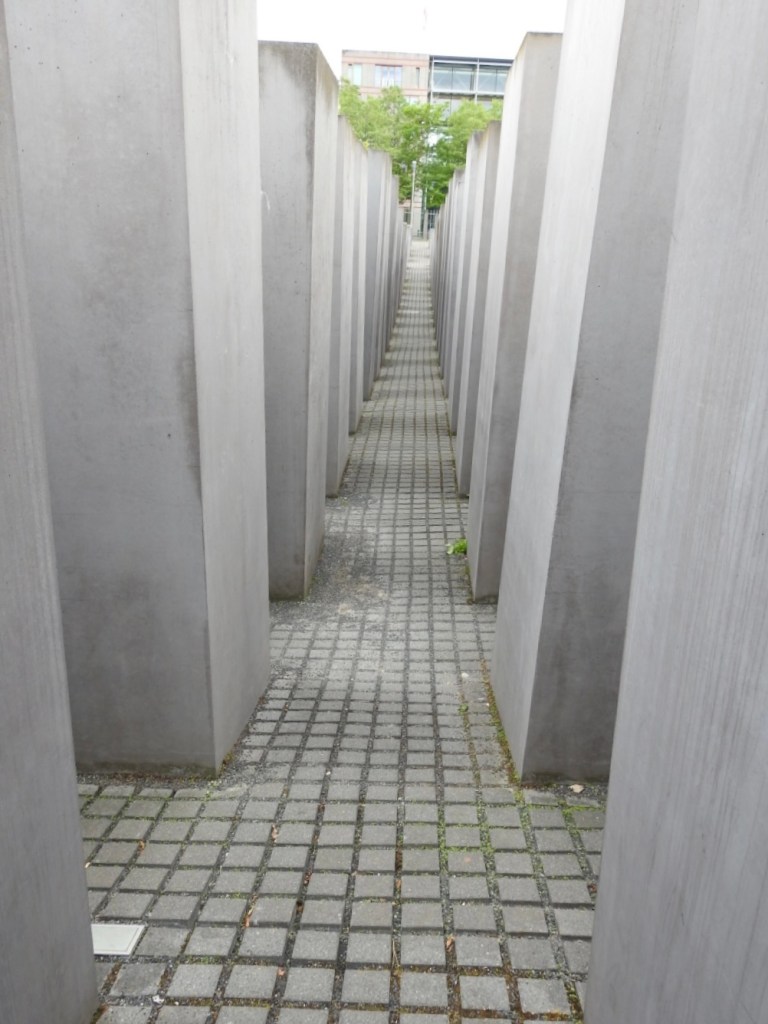
Around the corner from the wall we entered the Memorial to the Murdered Jews of Europe. It’s a strange, eerie place, that has the desired effect. By the time we wandered through it, I had time to feel disorientated, confused, trapped, alone, dismal, but also I emerged I felt hopeful. The artist says nothing about it, leaving it to the visitor to interpret. I think it’s a good use of this entire block. I think we will see and hear more about the murdered Jews of Europe. On the block diagonally opposite the memorial is another very historic site, a dirty, unpaved, uneven, semi-occupied car park, for some old communist apartments, one of which hosts a bubble tea shop. The carpark is the site of Hitlers bunker and the accomodation with the bubble tea shop is the site of his headquarters. If there’s one thing for sure, it’s that there’s nowhere here for neo Nazis to immortalise or glorify Hitler!
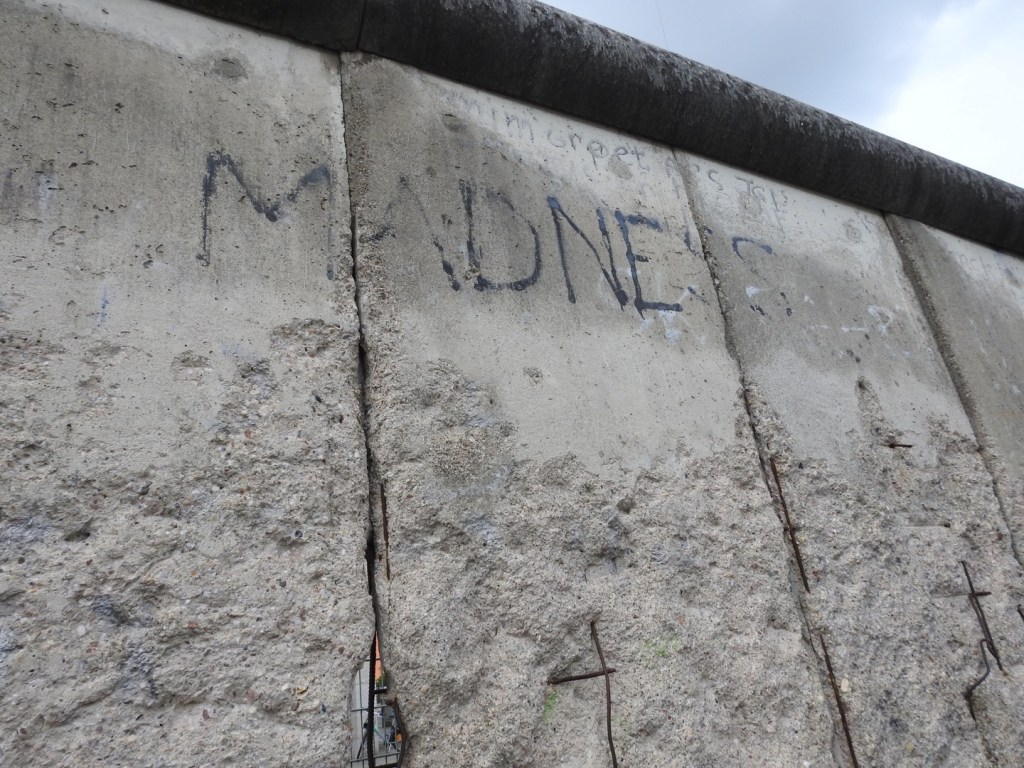
Further along we encountered other buildings including the one occupied by the we-shouldn’t-exist German Ministry of Aviation and stood under the office window of Hermann Goering. This building is adjacent to a remaining piece of the Berlin Wall and we heard the story of the Holzapfel family who zip lined from the building across the wall and into West Berlin! Such bravery and such a risk. They made it though. Meanwhile almost everyone else had to remain on the wrong side of the division, with the threat of instant death if they tried to escape. It’s quite confronting to stand at The Berlin Wall. To cross this off the Seventy B4 70 list is unreal. Between hearing about “The Germans” from my English family and learning about Germany when I did German as my chosen language in high school, it’s a bit like a reality check and history lesson all rolled into one. I’m glad we are here for a few days. It gives us the chance to let it all sink in. Not far from here, at Checkpoint Charlie, was where our 4 hour tour ended. It was an excellent tour and an excellent way to orient ourselves to the city, the sights and the sites, and the history. Once again, well done AirBnB.
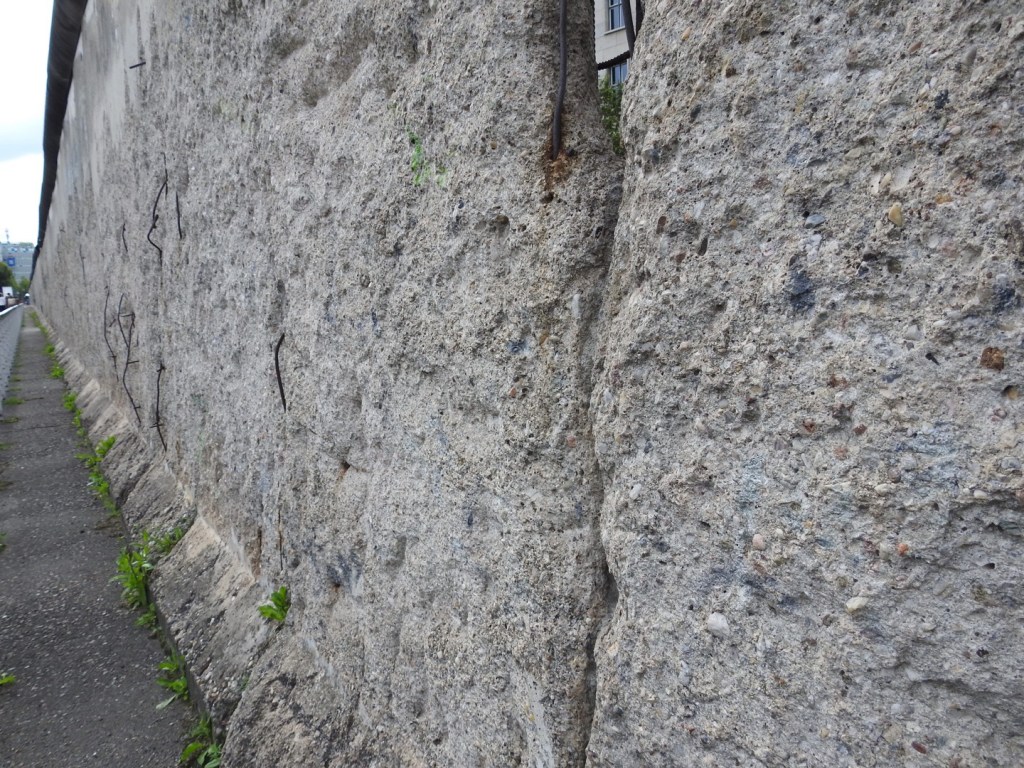
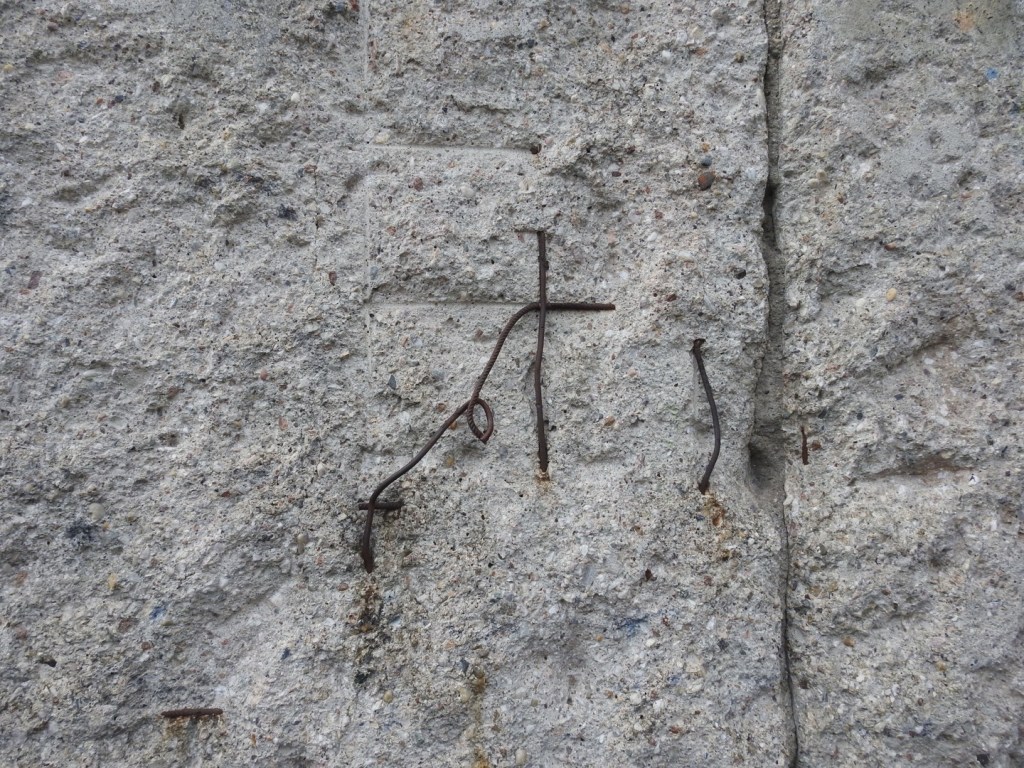
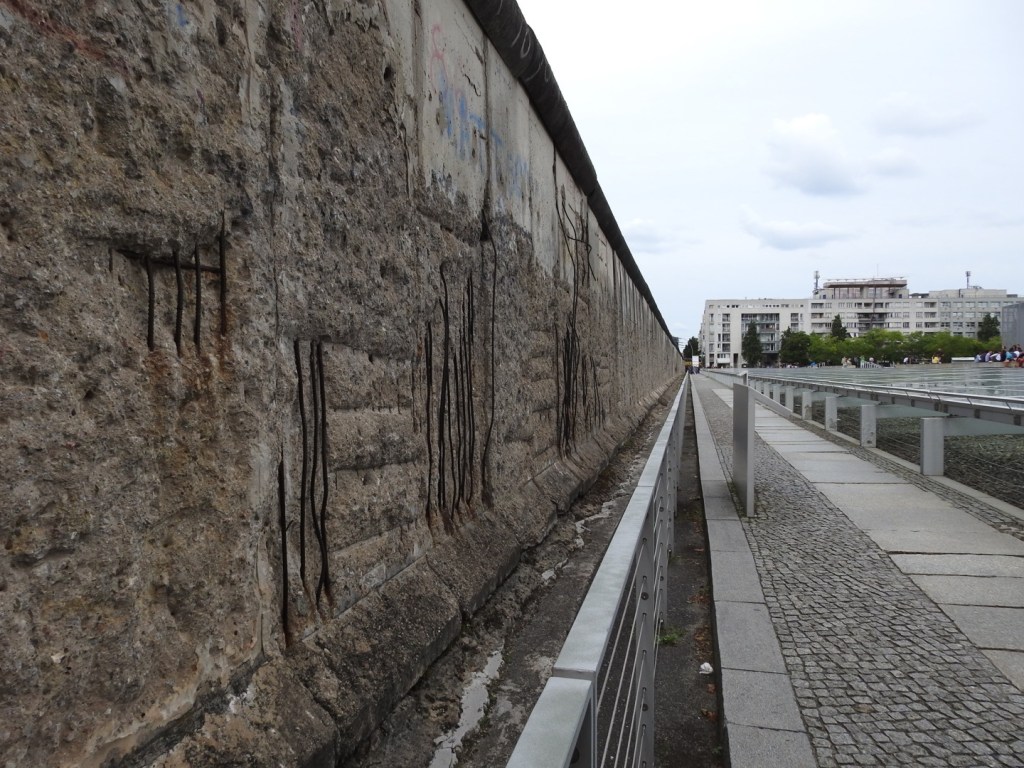
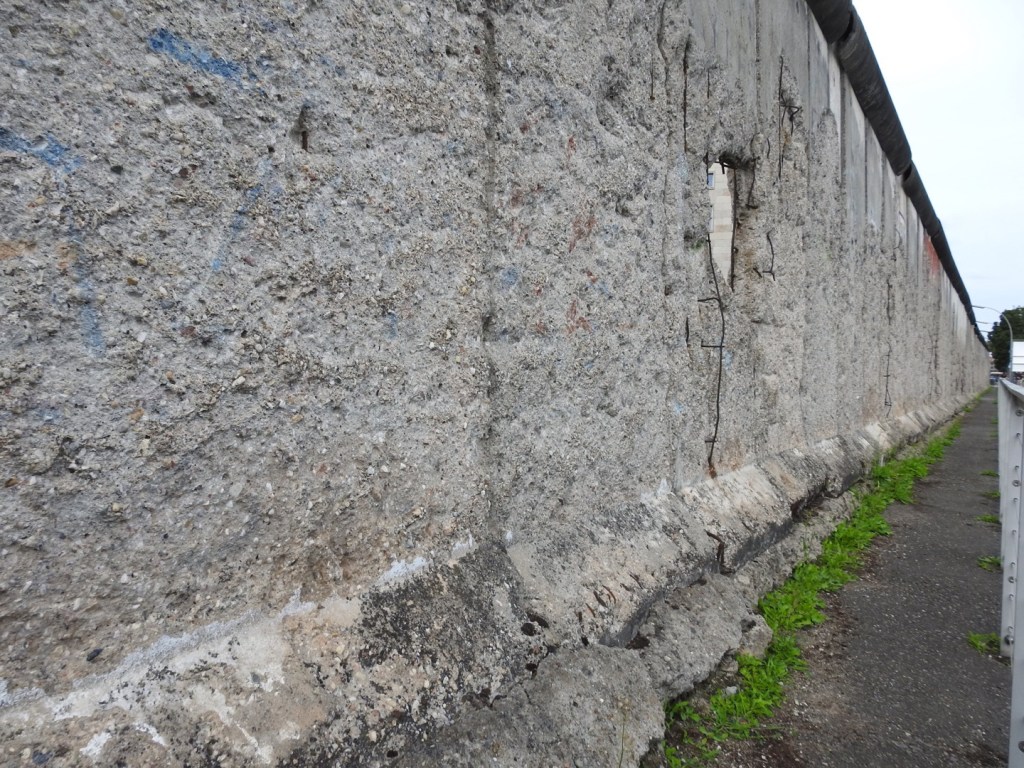
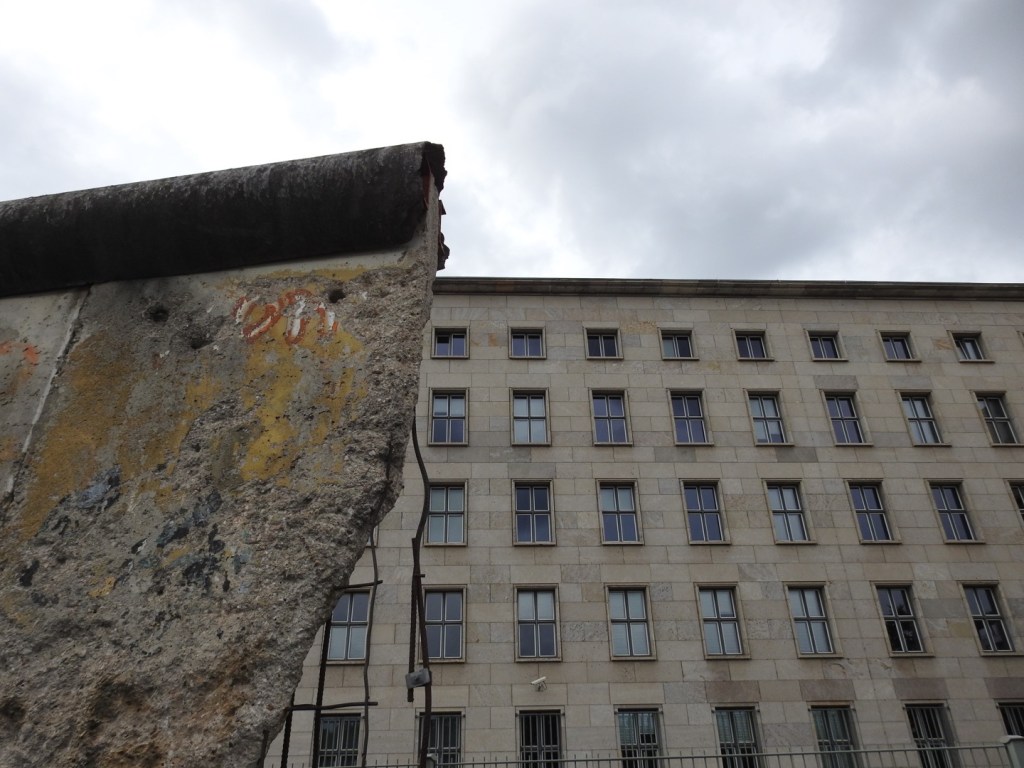

To give ourselves some time to condense and process everything we headed to a cafe to have a beer and something to eat, overlooking the section of wall. The Wall. Unbelievable. There is a museum adjacent to the site, The Topography of Terror, that we had a wander through, before starting the trip home. With very sore feet, we decided to try out the public transport system, which proved to be highly efficient and very easy to use. What a day! So much history that merges and blends into each episode of human life in this city, while also having its own place and uniqueness. I wonder if I can start to understand just two aspects of the many, the holocaust and the wall? So far I have managed to work out that the wall went around the people who were free to move, to stop the people who they wanted to keep in place from going to the place behind the wall where people were free to move! Complicated, and hopefully some more time spent here will help me understand it better ….
Sunday 7th August (Day 8)
A slower start today, it is Sunday after all. We didn’t exactly sleep in, we just took our time having coffee and breakfast and getting ready to get out the door. The light rain and grey skies didn’t really help us to get out the door. Eventually though we were on our way, wandering past our water tower, which stands where there was a factory where the Nazis operated a concentration camp! Just here on our street! My goodness. Thankfully the water tower stands there now, but we found other evidence that may be related to the factory on the block that is now a park, including a chimney. I doubt there’s a place here that isn’t touched somehow by some part of the history of the city.
After a coffee and bickie at a local cafe, we jumped on the train and headed into the city. The first Sunday or each month all the museums have free entry. Needless to say the combination or free entry and a rainy day meant that there were long queues to get into all of the museums, so we decided to go into the cathedral. However the queues weren’t much better there and we needed to buy a ticket for a certain entry time, so we abandoned that idea too, and headed over the the Humboldt Forum which, like everything else has a long and interesting history. Obviously it was originally just swampland along the river that Berlin is built on, before it became the site of a palace which was bombed to smithereens during the war, before becoming an ugly asbestos-filled government building in East Berlin, before finally being rebuilt in the image of the palace, but as a public space for people to enjoy. The history of the building and the site was interesting and enlightening, for the entire city of Berlin, not just a specific area. We did wander through couple of other areas within the forum before the crowds and the threat of COVID drove me out into the rain again.
We decided to head to the outdoor Berlin Wall memorial site, so we had to get back on the train to Bernauer Strauss. The memorial encompasses an inside and an outside component. The outside component starts at the station we got out at, and finishes at what was a ghost station during the time the wall existed. We wandered along the edges of the external and internal walls in what was the death zone, observing the many replicas and information boards. It was all starting to make more (but also less) sense. I could better grasp what happened, in terms of the actual structures that went up, and how, but the senselessness of it was even more apparent. Here people died trying to flee the soviets and rejoin their families, who by virtue of a physical barrier erected while the city slept, were suddenly living in a different city! For a period of time, the external wall of the the building that some people lived in along Bernauer Strasse became the Berlin Wall, complete with a window to the west. Of course these windows and doors were quickly sealed, and the occupants were moved further into East Berlin. Eventually the building facades were completely demolished and a high outer wall with a rounded top was built, with a lower inner wall added. Between the two was the Death Zone, with trigger points, lights, guards towers and a patrol road. There is a replica section that we came upon without realising. There was no one there but us, and it gave me a huge cold shiver!
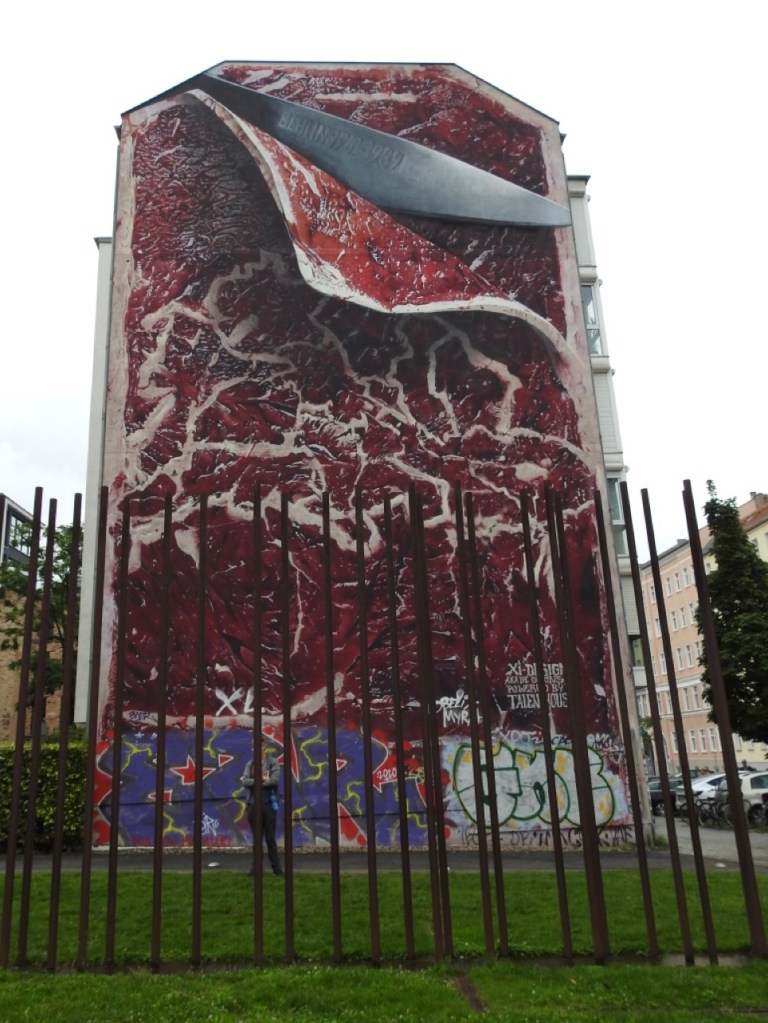

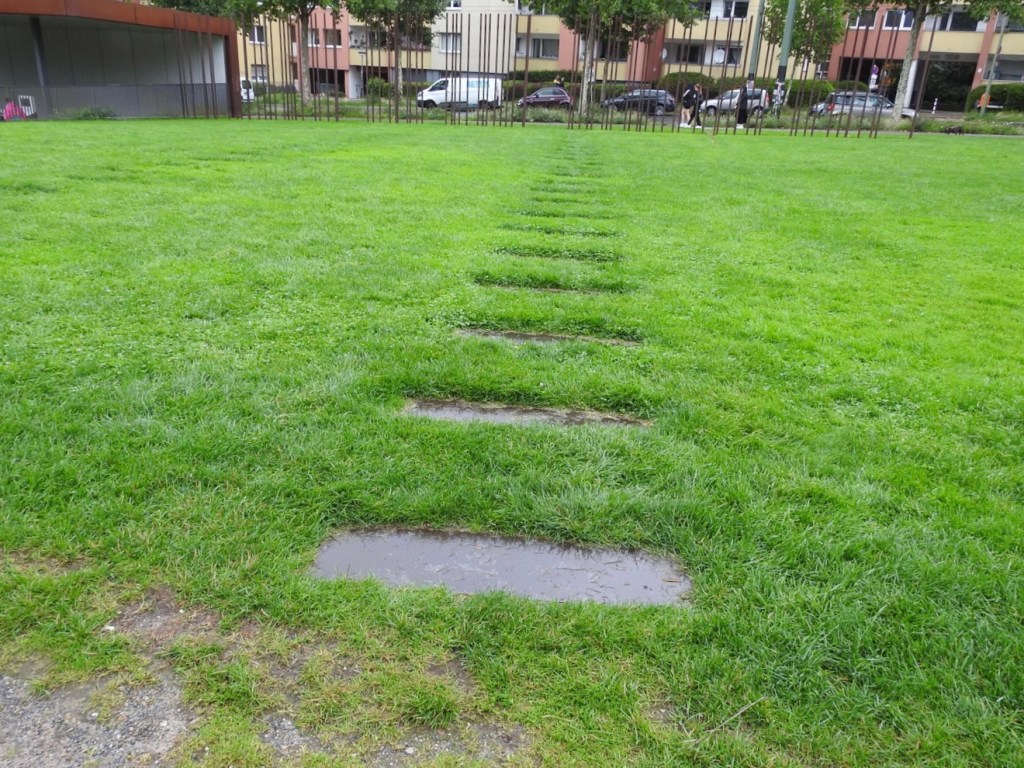
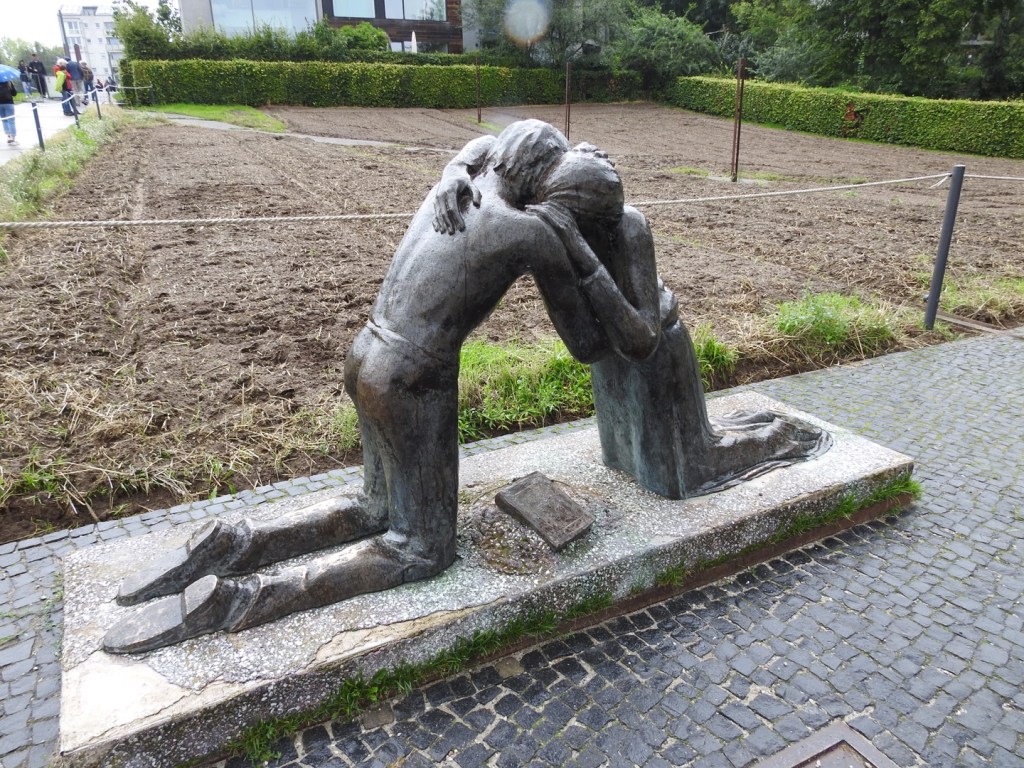
Across the road from the replica section, is a museum with some very interesting information. It also memorialises some of the people who escaped and some who lost their lives. The museum is well worth it and ends on its roof, about 4 stories up, where the visitors can look into the death zone. The museum also linked us backward to Prague and the David Cerny car sculpture in the grounds of the German embassy. Apparently East Berliners had to wait a long time to get a car, which was a Trabant, and many used them to get them to the farthest borders as they relaxed, and then abandoned their cars before going into Czechoslovakia and over the fence at the embassy. Another puzzle piece solved.
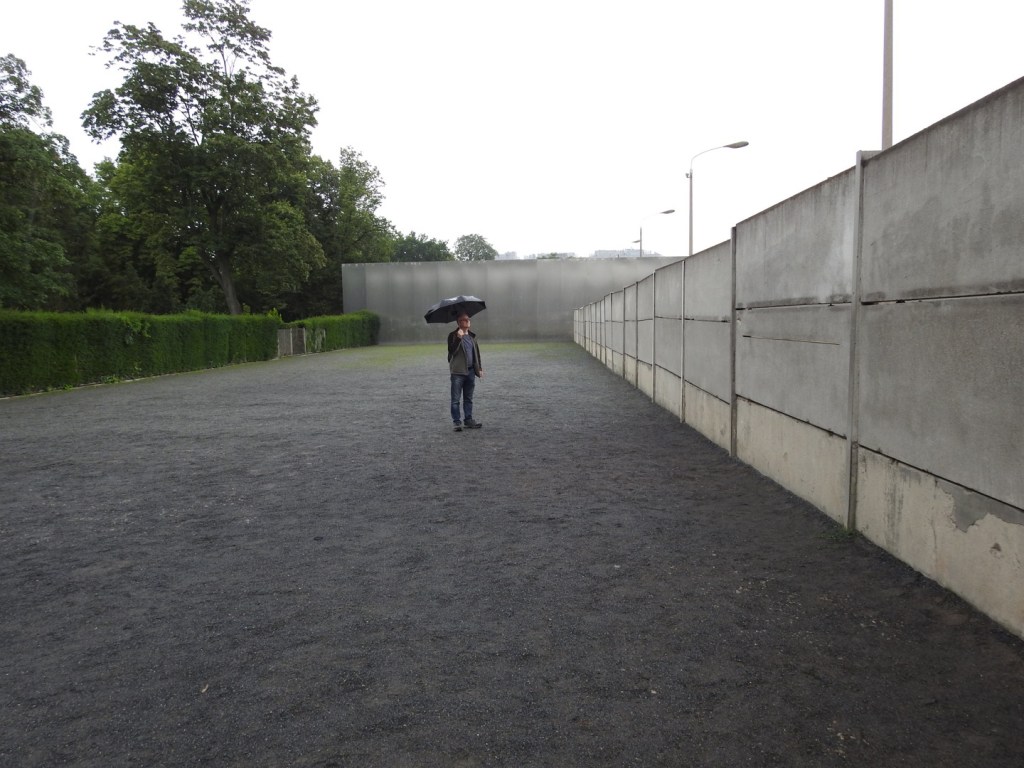
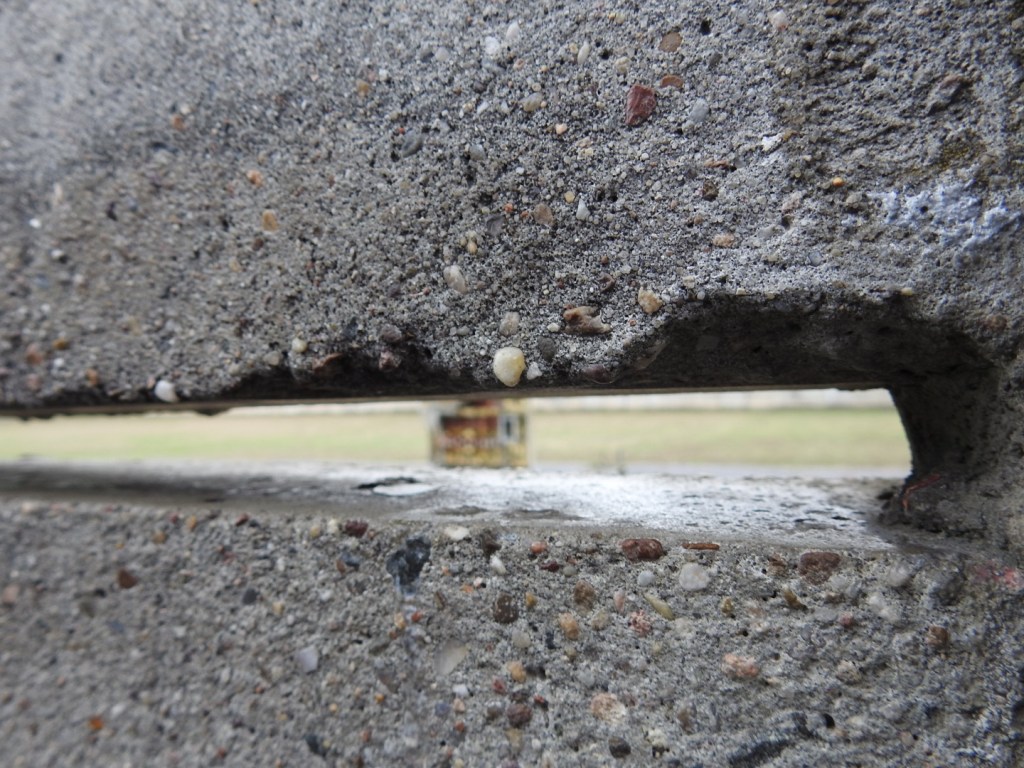
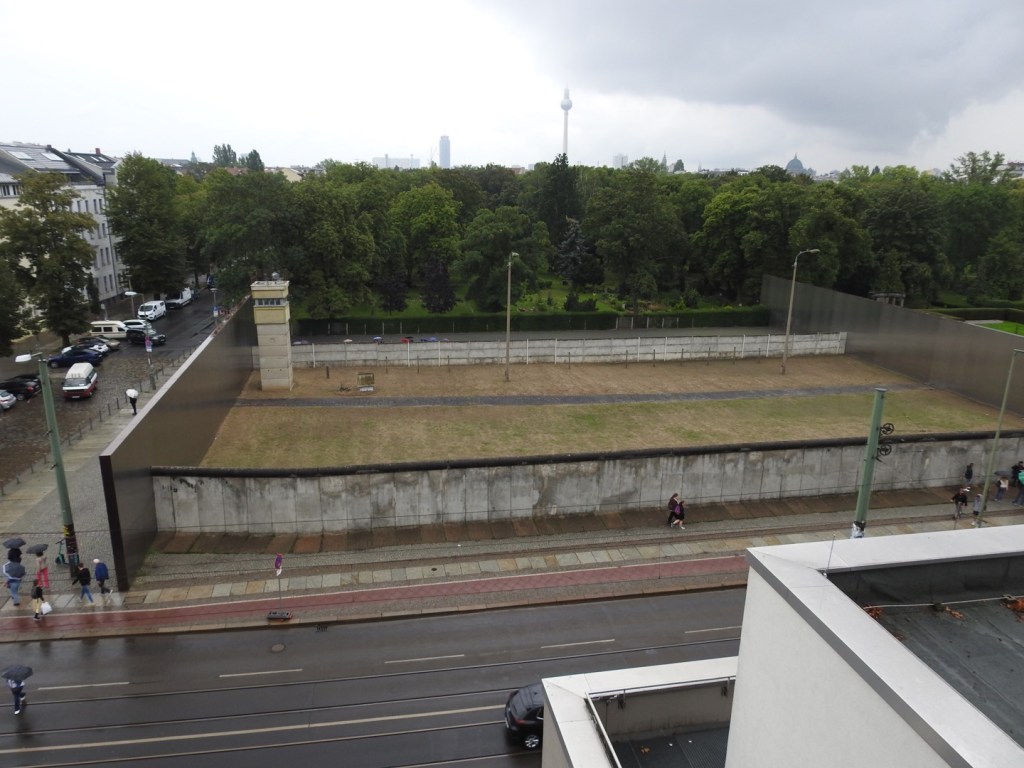
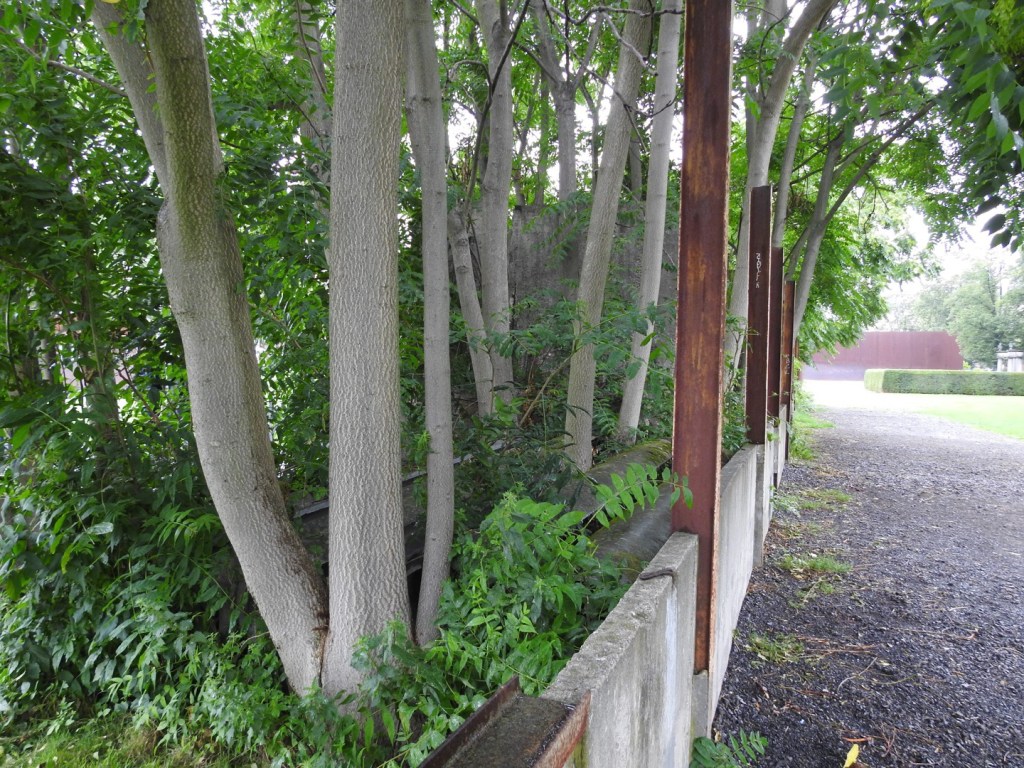
After spending a good hour inside, we headed out again and wandered the last outdoor section where I touched The Wall! Both inner and outer sections collected by the church and stacked up among a few trees that have grown around them.
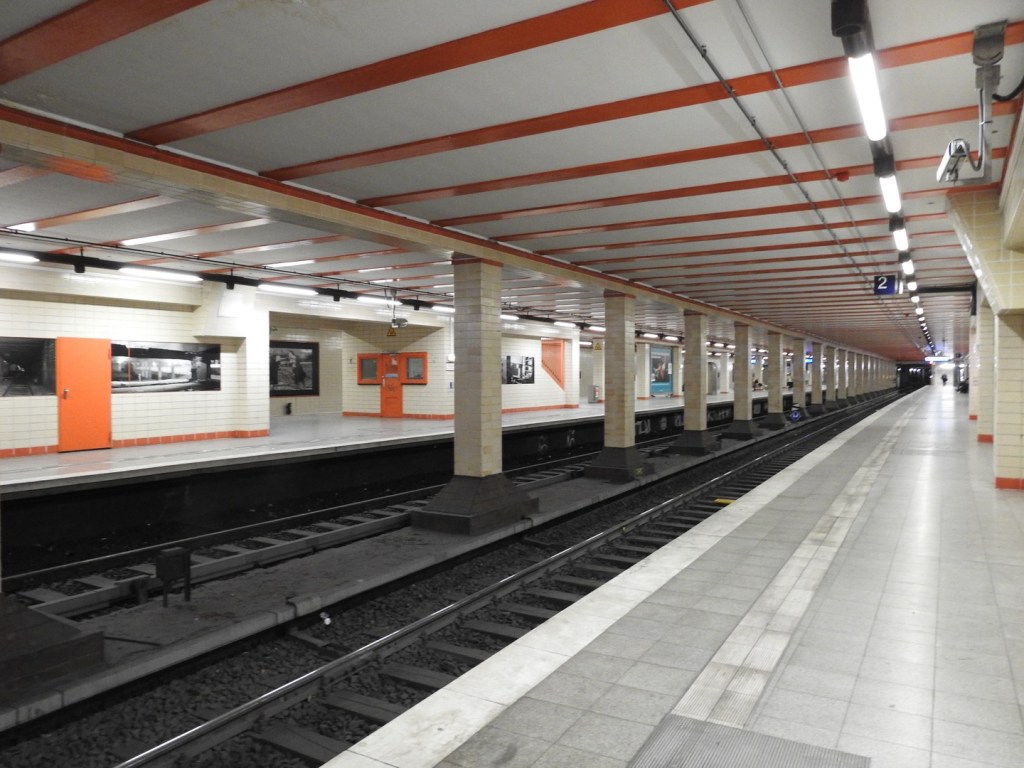
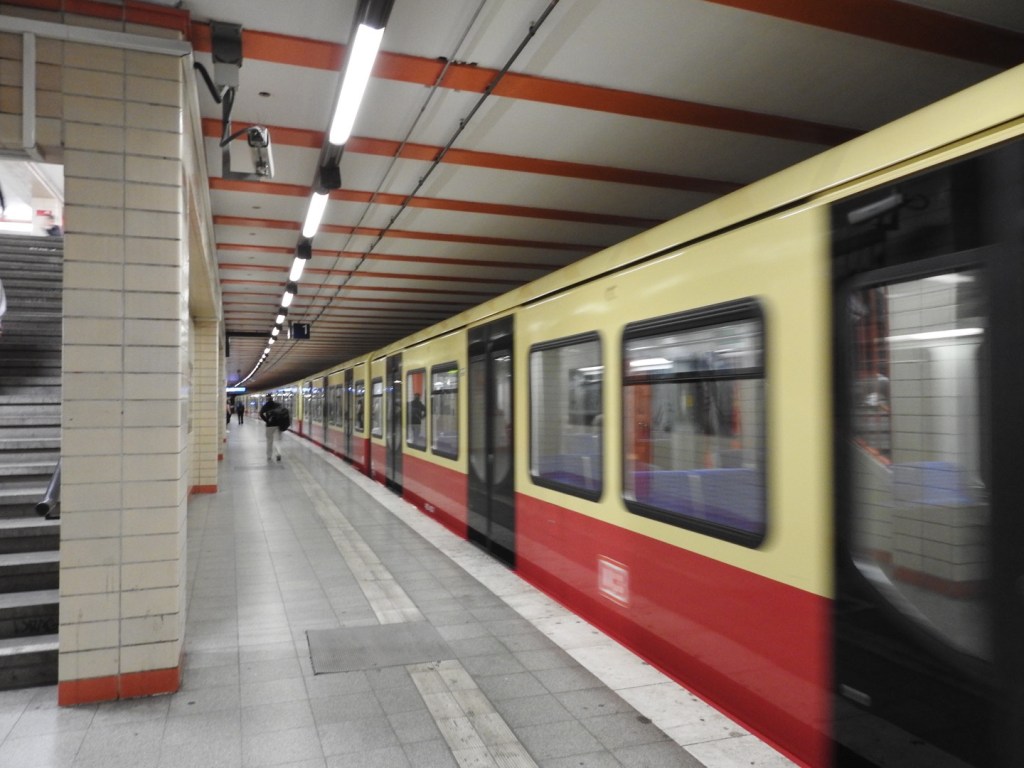
Finally, to wrap up a few hours at the site, we headed down into what was a ghost railway station during the 28 years the wall was up. It was closed down to prevent escape via the tunnel. However the trains still ran straight through the station, from one West Berlin station, through 3 ghost stations, to another West Berlin Station. It’s actually quite an eerie station (as are many other Berlin stations), and after a quick look around, we were glad to come back above ground and catch a bright and efficient tram home. What a big day! Time for a rest and for Green Hair Man to work out where we are going to have dinner.

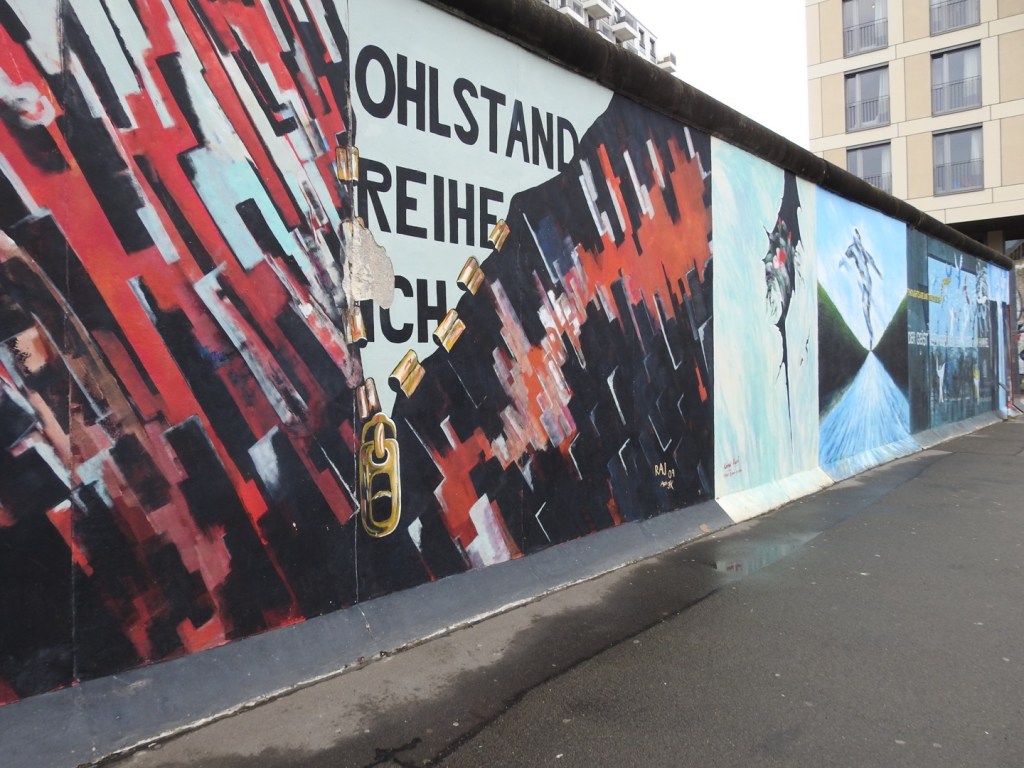
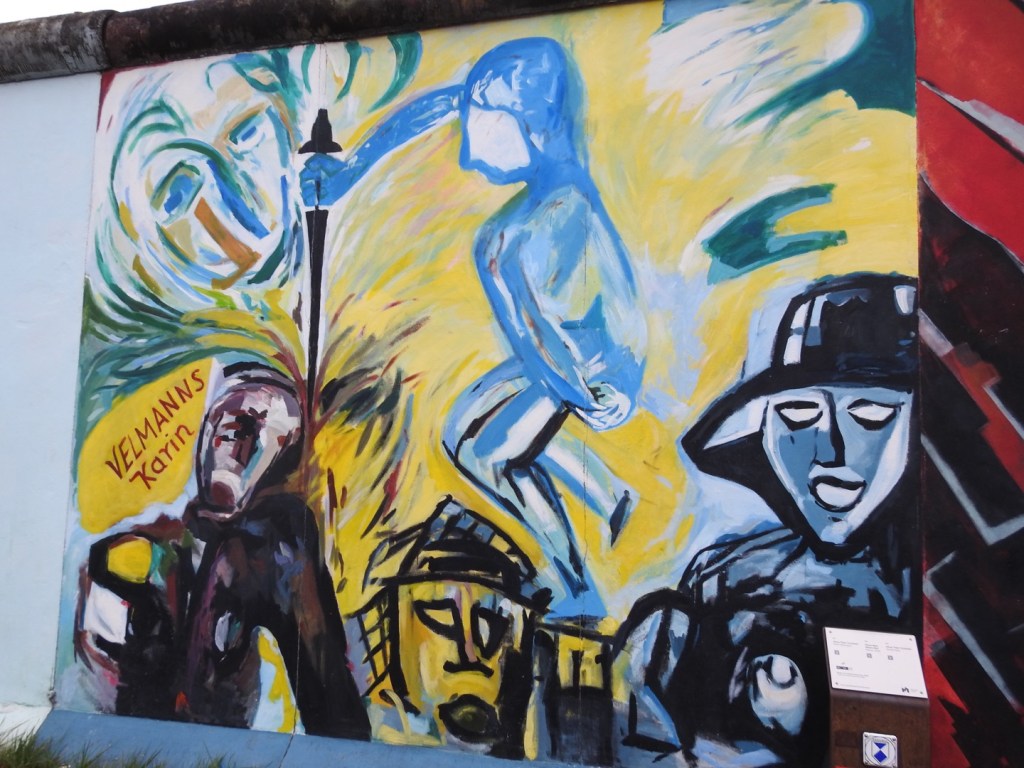
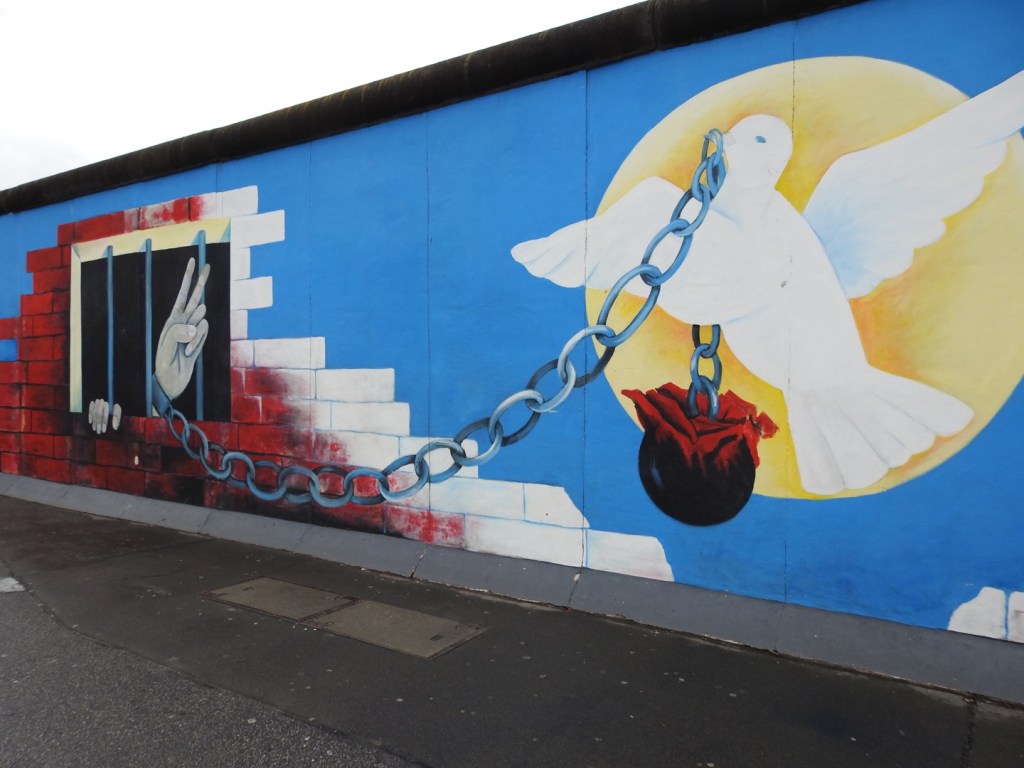
Sticking with The Wall theme for the day, he had us “back on the bus” from home and down to the East Side Gallery! It’s awesome and we walked the entire length of it. These are a few of the many paintings along it, just on the one side. At the end I got a bit confused because for this section of the wall, they swapped the shorter and higher walls around. So the artwork is on the outer, lower wall, where everywhere else the outer wall was higher. Here the river also acted as a barrier to escape! Time for something to eat and a beer!
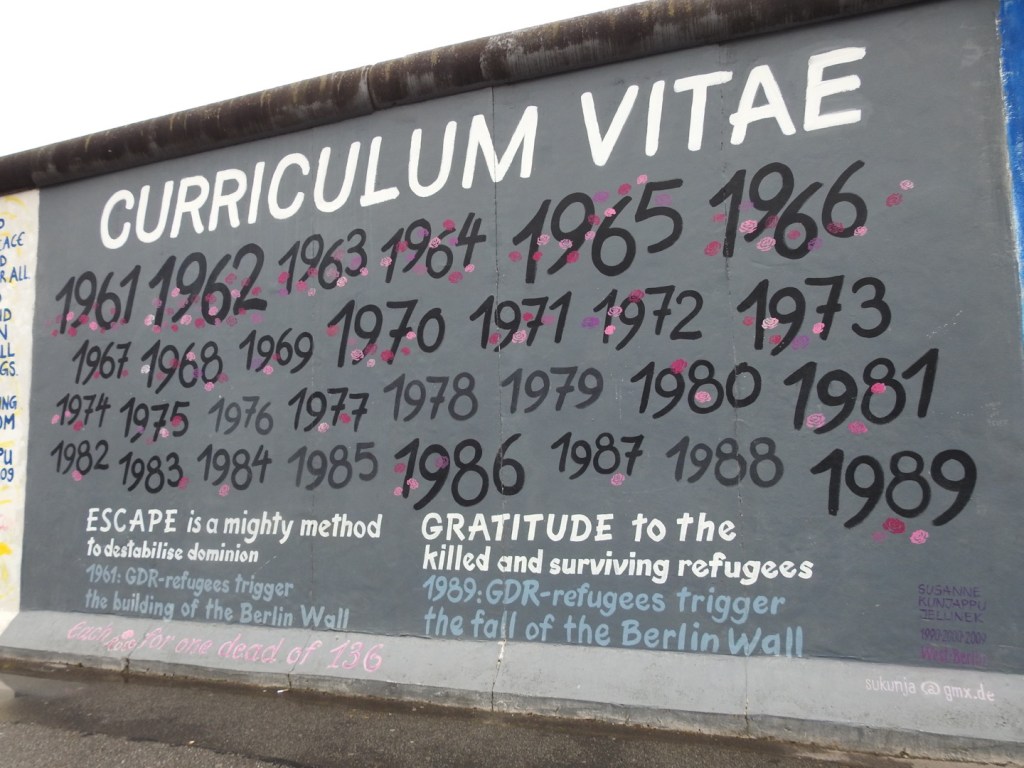
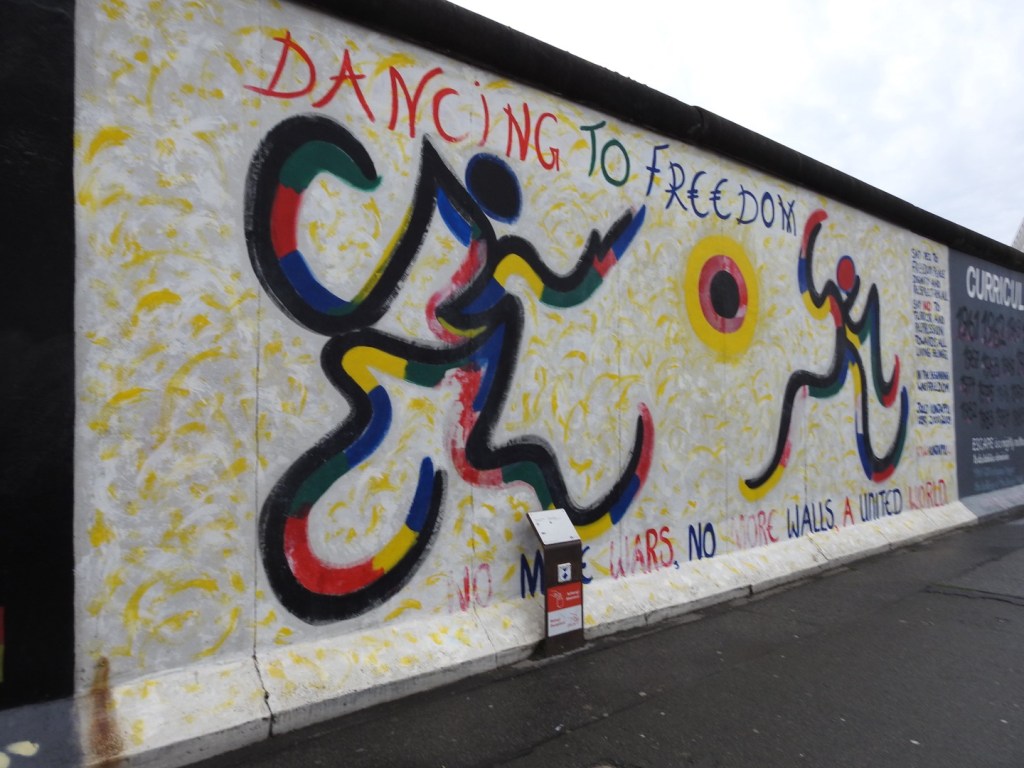
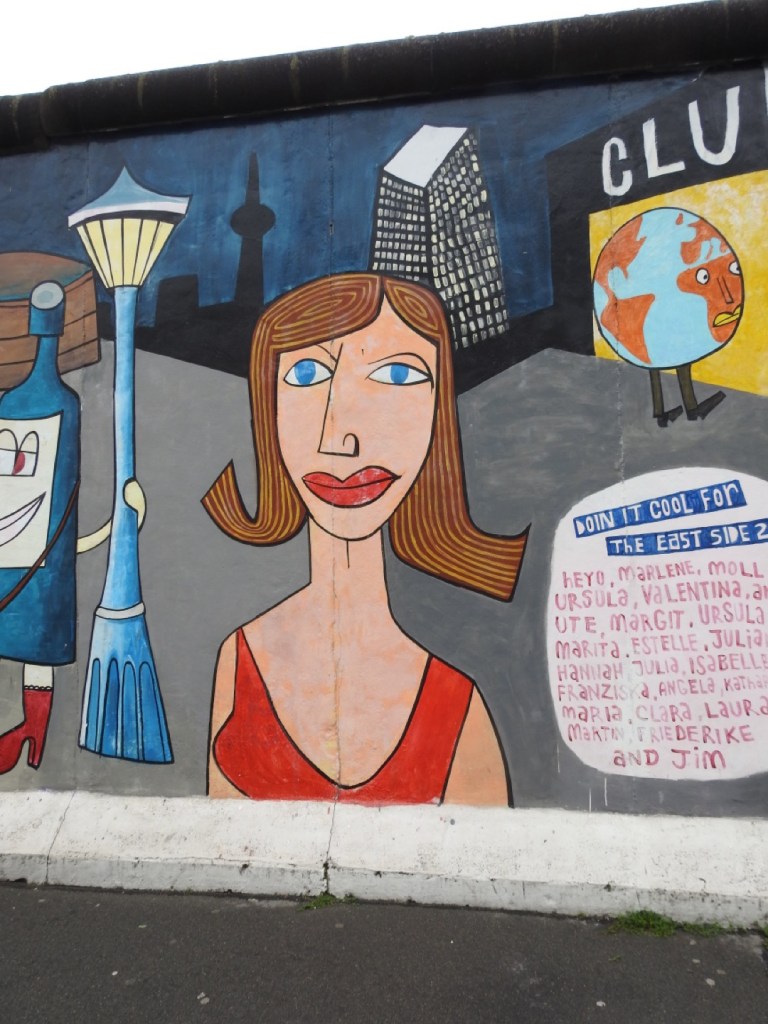
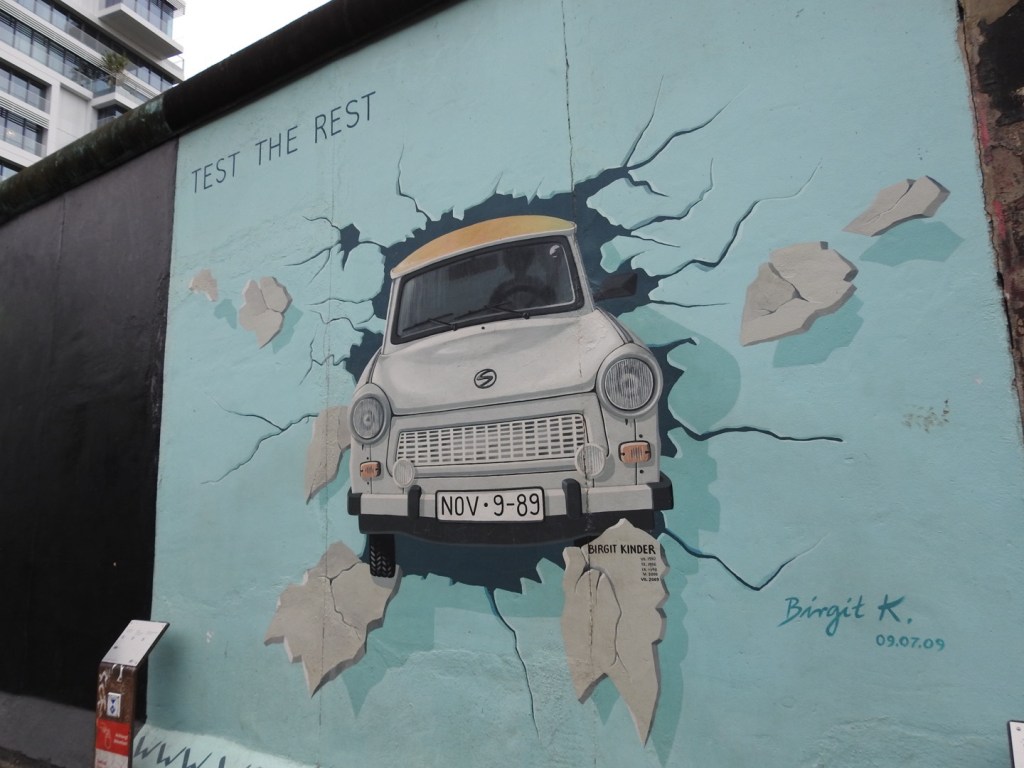
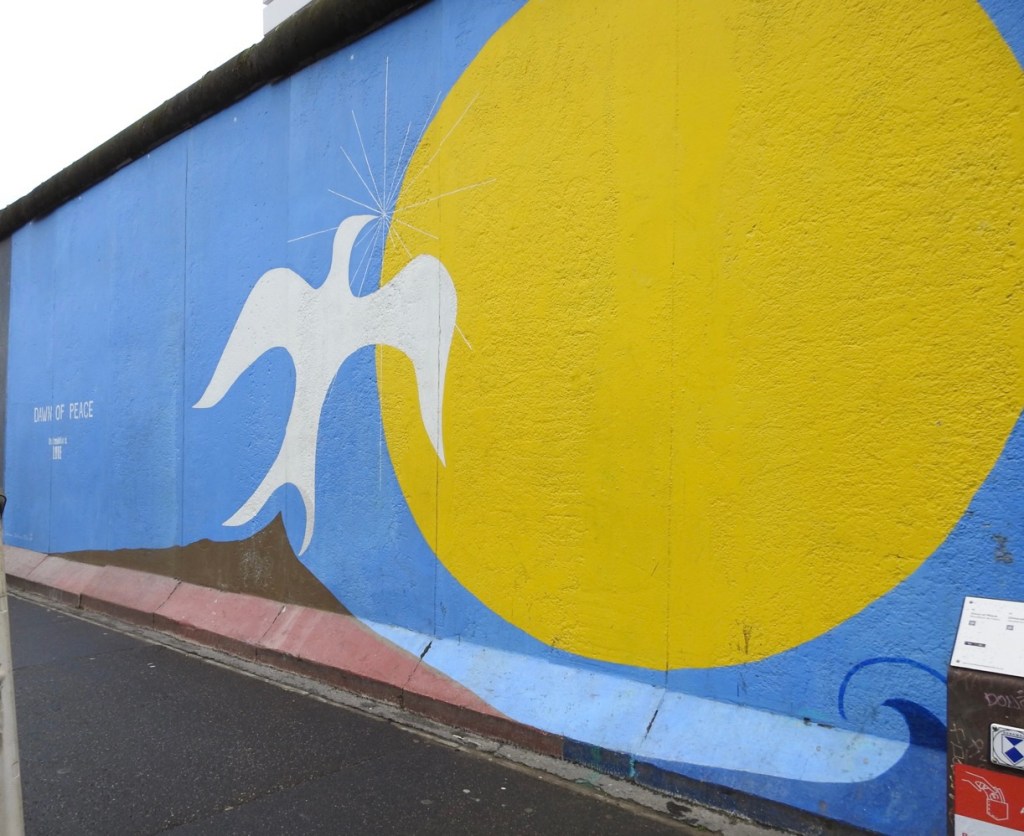
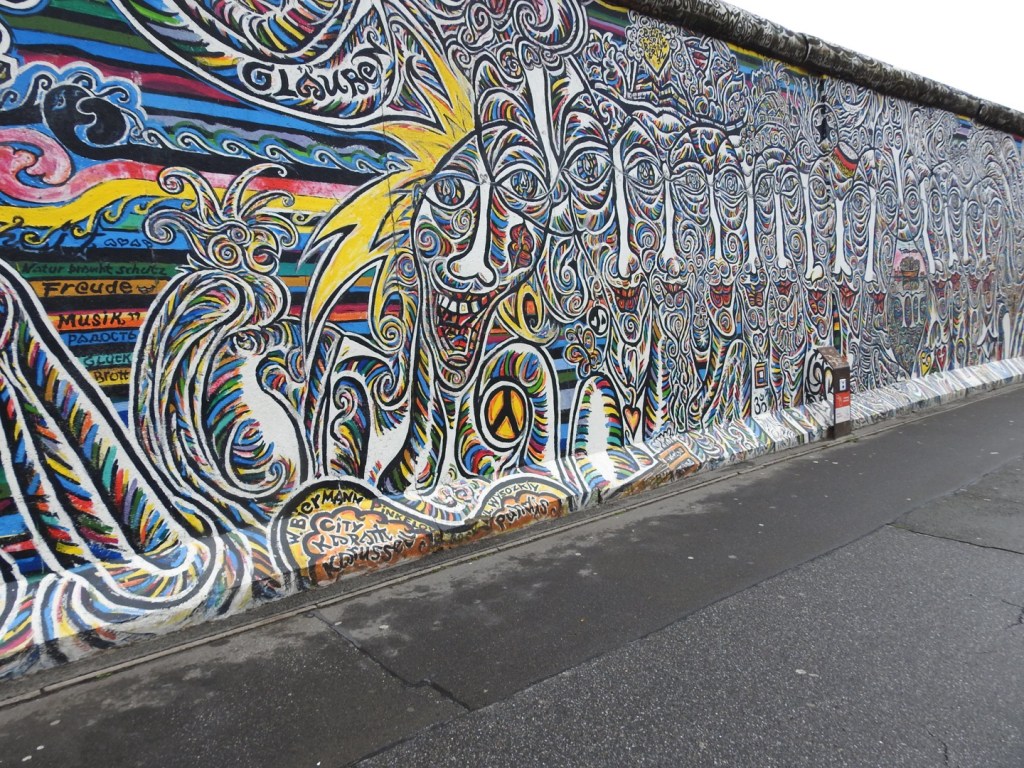
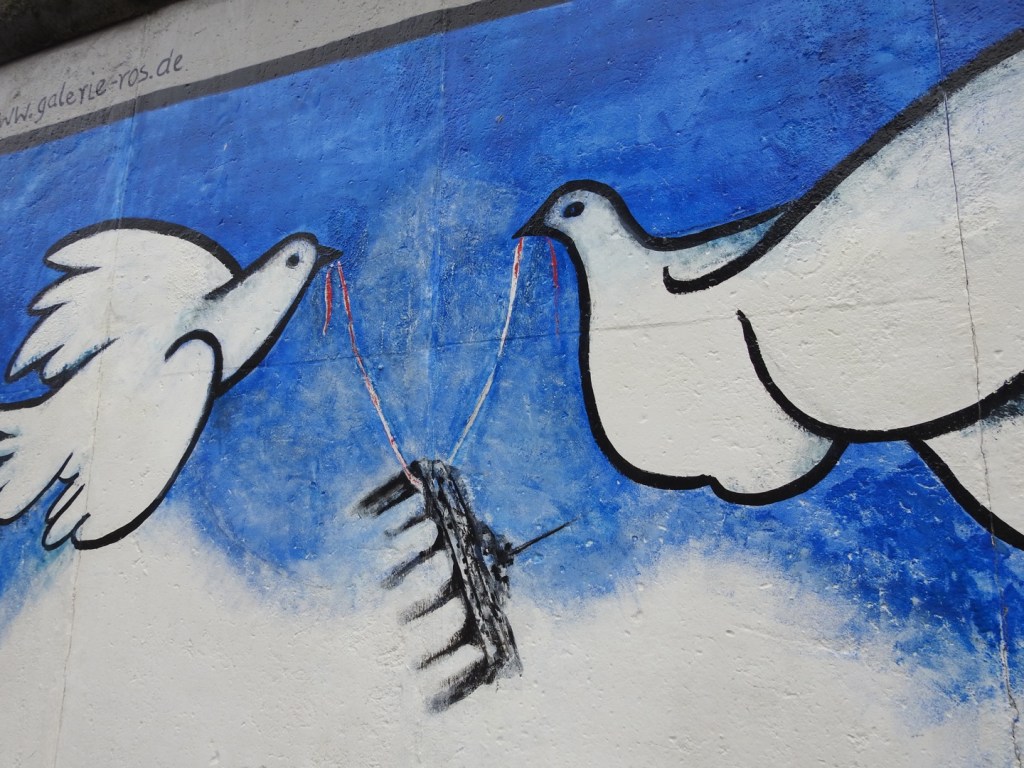
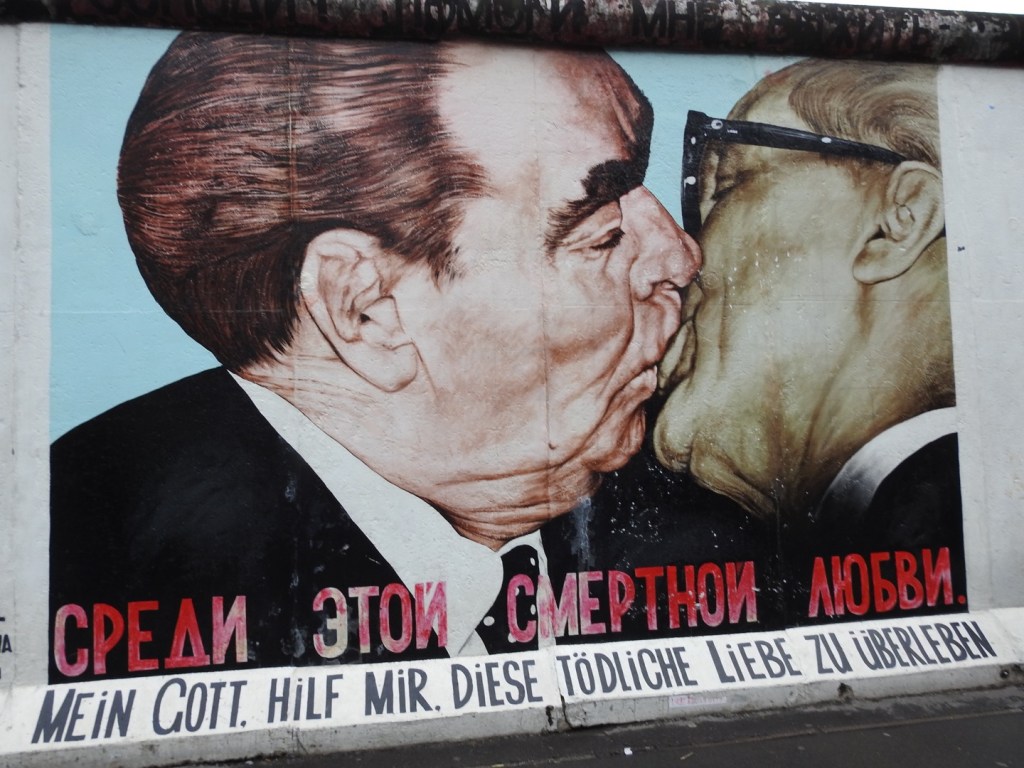
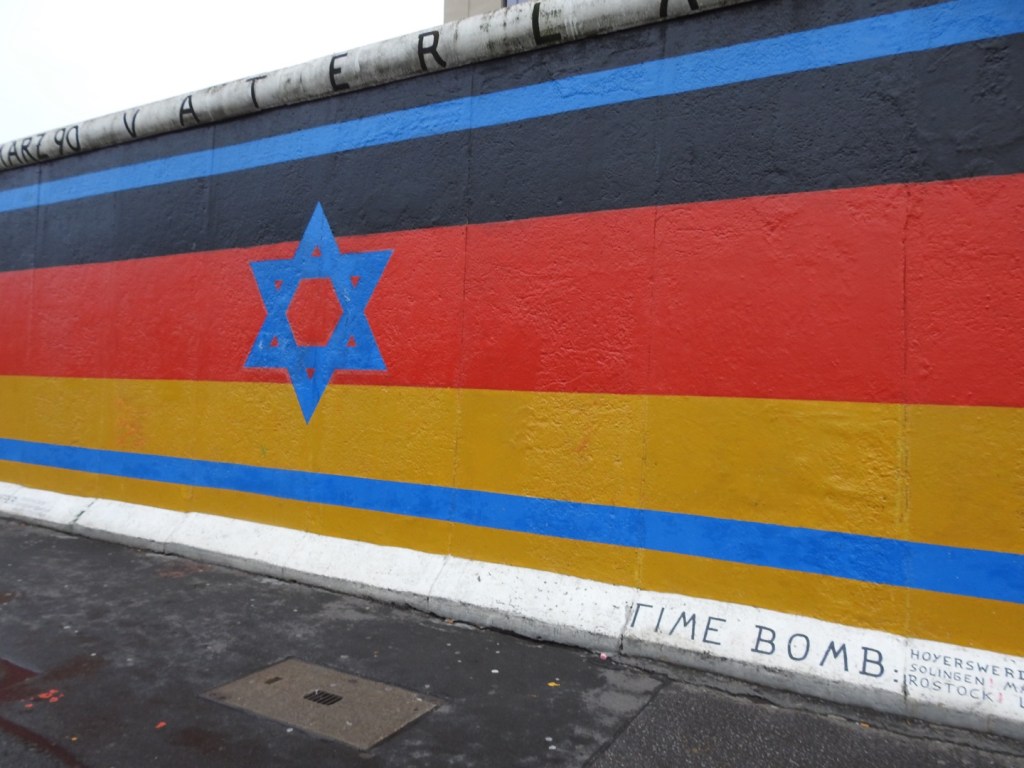
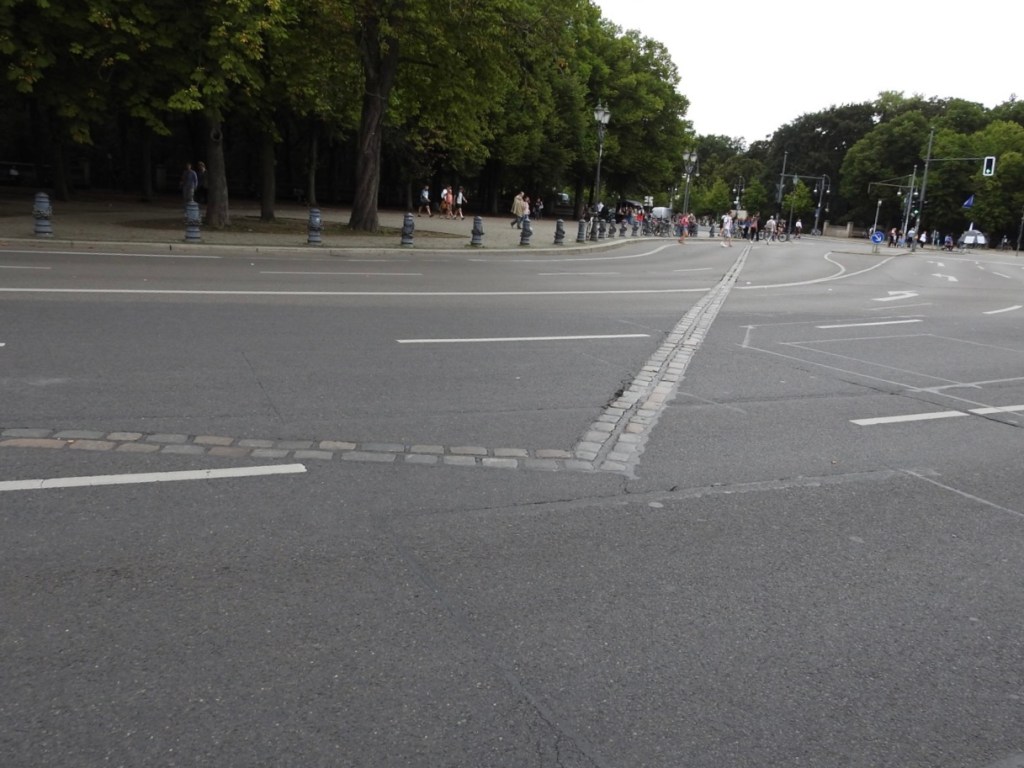
I am sure that we will see more of or about the wall, but the things we did today were a great way to understand how it affected people. I still need to get my head around the why, but that‘s for another day. For anyone who is considering a trip to Berlin, make sure you also apply the Google Maps Berlin Wall outline. It is a great way to know when you are near where the wall ran, as there is almost no evidence of it now. There is a cobbled line that follows the wall route, but you could walk over it without realising it. And don’t be surprised if you become blasé. Green Hair Man caught me on my ‘phone as we went past a section. Perhaps that’s what happened to the West Berliners, although probably not as quickly!
Tuesday 8th August (Day 9) – content warning, skip a day if you don’t want or need to read about our trip to Sachsenhausen Concentration Camp
I am anxious about today. We are devoting it to trying to understand what happened to the Jews of Europe, along with other people the Nazis considered to be undesirable, like dissidents and homosexual people and gypsies. I have always thought I should experience a concentration camp, and there is one on the outskirts of the city, which was initially at Oranienburg, then moved to Sachsenhausen. It was the first in Germany, established in 1933. So, we are going to go out there and experience it. It requires us to get a train beyond the city limits and then a local bus. There is a tour, but it is also possible to buy a self guided audio tour (€3.50) and listen as you walk. By doing the latter, we can leave when we are ready.
We set off quite late, after a big breakfast at a nearby cafe. The lady didn’t speak English and they didn’t have an English menu, so Green Hair Man ended up with 2 meals, a pan of 3 eggs and 2 toasted bacon and cheese sandwiches! No need for lunch! We also spent a little bit of time checking out our departure route and the station, in preparation for Wednesday. Eventually though, we were in the train, bound for Oranienburg. Unfortunately for us there was a rail replacement bus for the last few stops, but at least we got a nice jaunt through a few little villages. Once we were in Oranienburg we changed buses for the last few minutes, arriving at the camp far more comfortably than the internees must have. Once we had our tickets, we were free to wander up the long driveway, listening to the information about the camp’s uses over the years. Of course it was a concentration camp, purpose built to house “members of groups defined by Nationalist Socialist ideology as racially or biologically inferior”. After the end of the war, in fact within 3 months, the camp was used by the Soviets as a “Special Camp”. How convenient for them, everything they needed was right there!

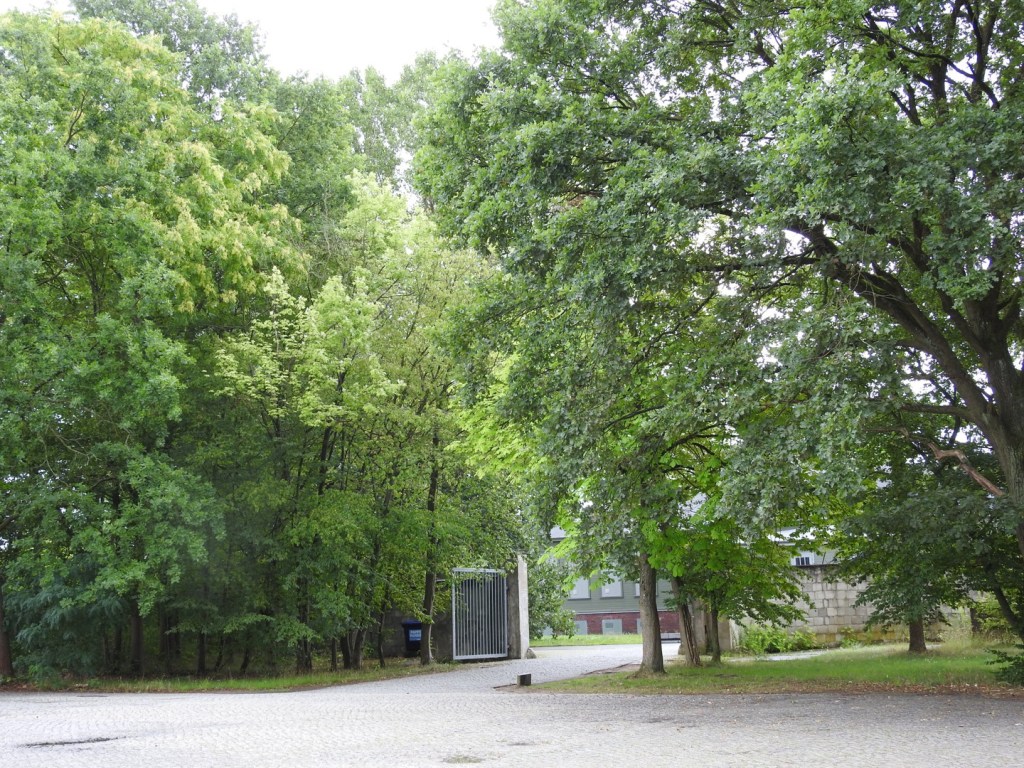

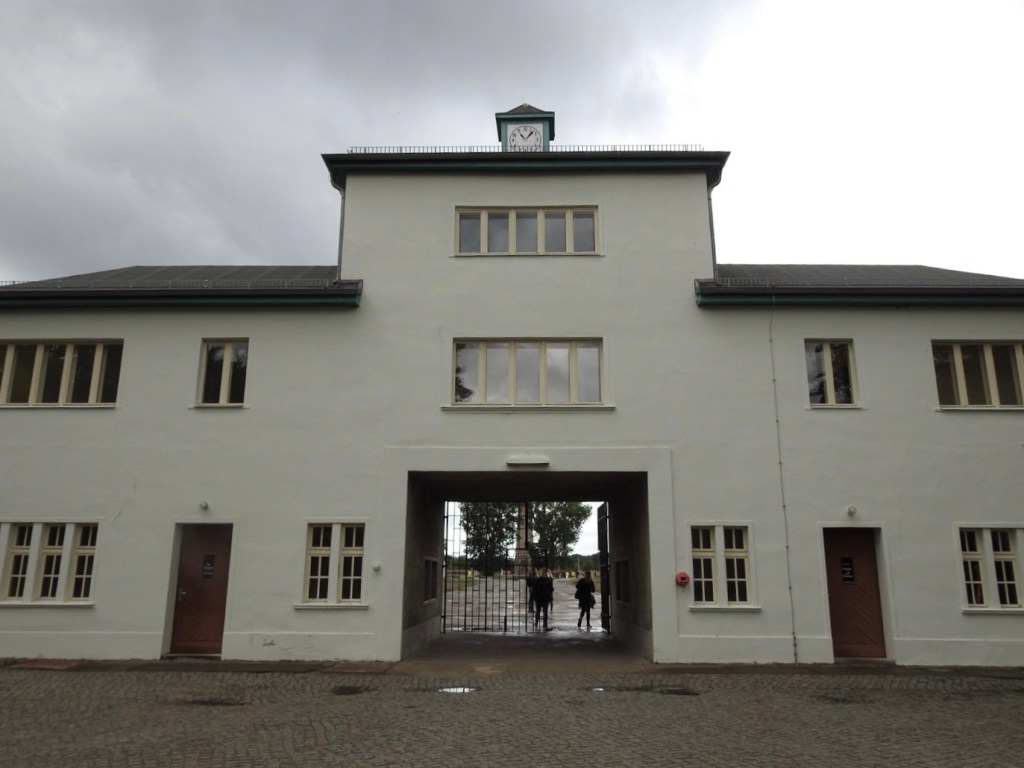
The camp was designed so that any guard standing in Tower A, the entrance to the camp, could see everywhere, everything and everyone! Of course there were also towers strategically placed around the perimeter just in case! In front of it was the roll call ground, where the living brought the dead with them to one of the rolls calls held 3 times each day. Bringing the dead expedited the process, meaning they didn’t have to stand around waiting for everyone to be accounted for. It also overlooked the shoe testing track, where prisoners being further punished had to walk and run endlessly to test shoe leather. The Nazis needed durable leather for their boots. We wandered the rest of the camp, listening to how the barracks, there were many of them, each housed hundreds of prisoners, initially in double bunks, then in triple bunks, with two people often sharing a single mattress. We spent some time in the replica barracks in the “small camp” where Jews were held until their transfer to Auschwitz.
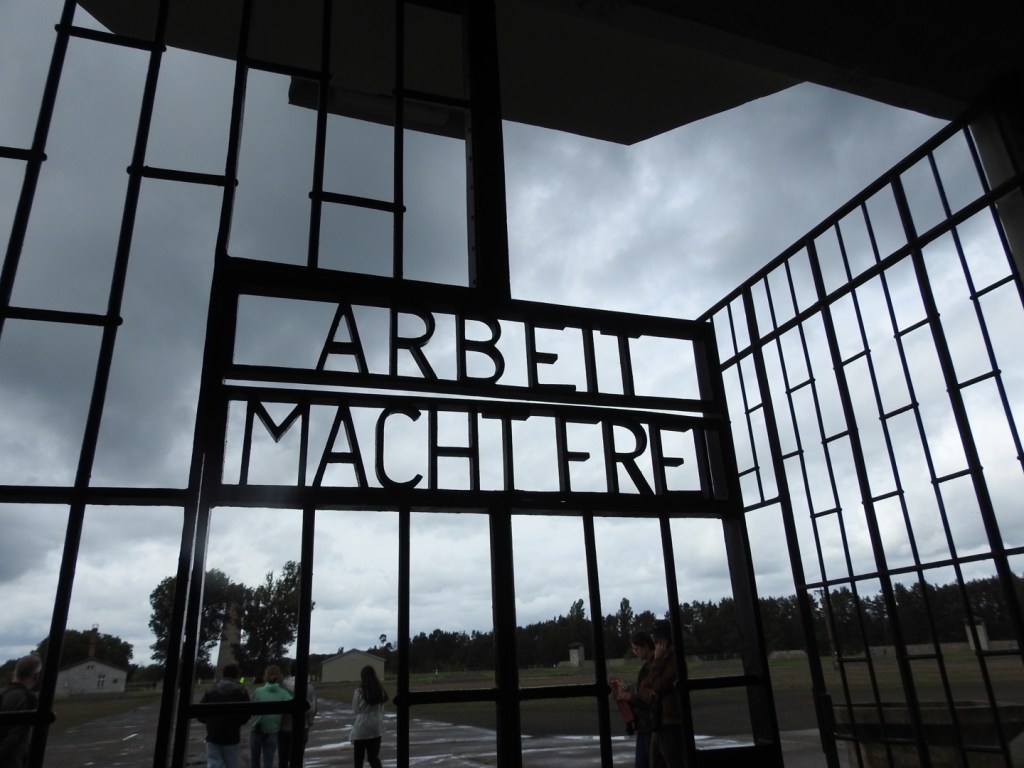
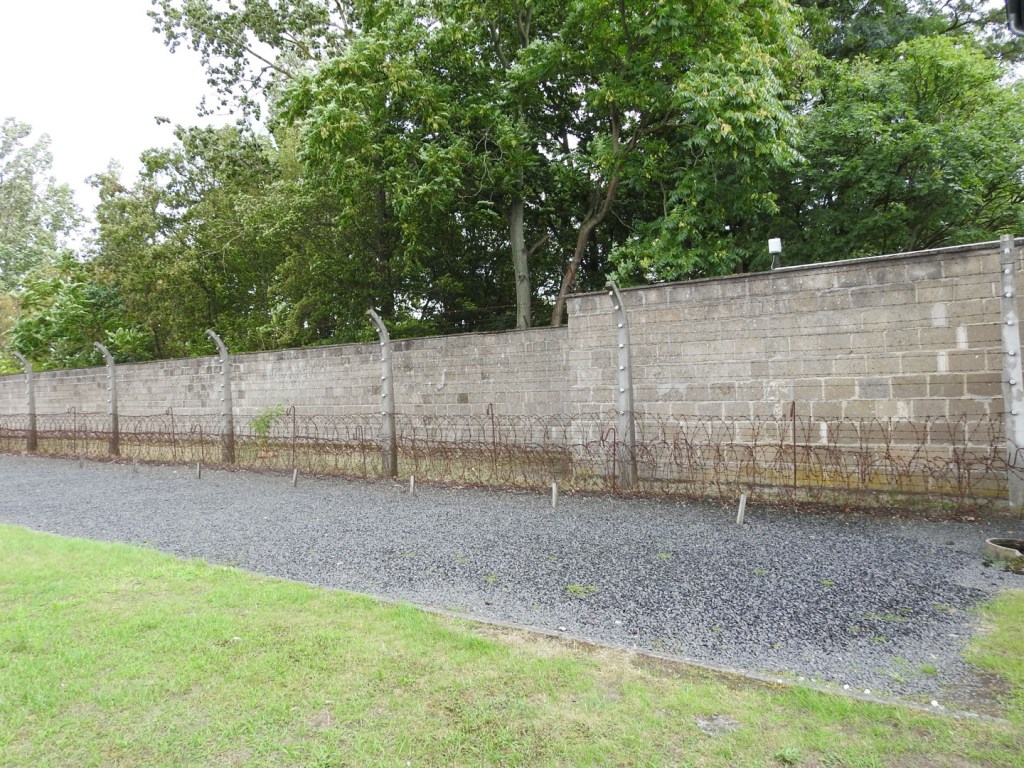
Ironically for a concentration camp, there was also a prison, where even worse things occurred to those who infringed the rules or those prominent folk arrested by the Gestapo. Of course there was also the area where prisoners were murdered. There was some gassing, but another execution method the Nazis used involved the pretence that a health check was being undertaken, having the prisoner stand with their back against a measuring tape, then shooting them through the back of the skull via a strategically placed gun. I suspect I’ll get a cold shiver every time I have my (ever decreasing) height measured. Naturally the Nazis needed both mass graves and eventually a crematorium for all the bodies. There were 200,000 people imprisoned in Sachsenhausen, of which “tens of thousands of them died of starvation, disease, forced labour and maltreatment, or were murdered systematically”. Thousands more died on death marches, so that by the time the camp was liberated only 3000 sick prisoners and their carers were freed!
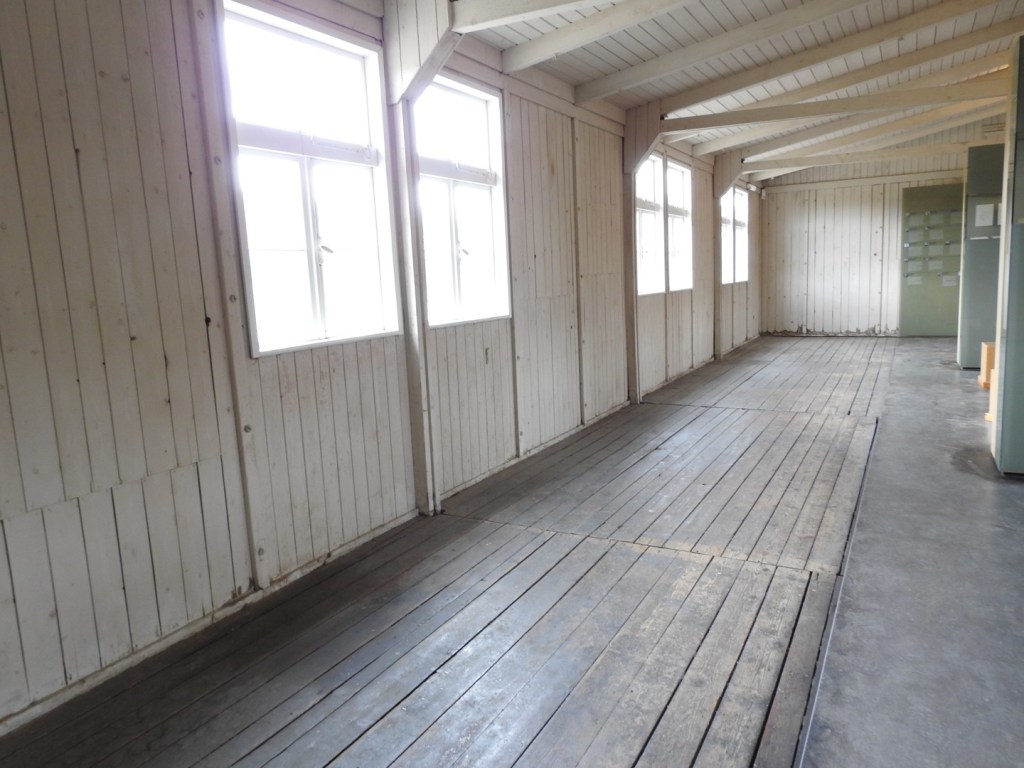
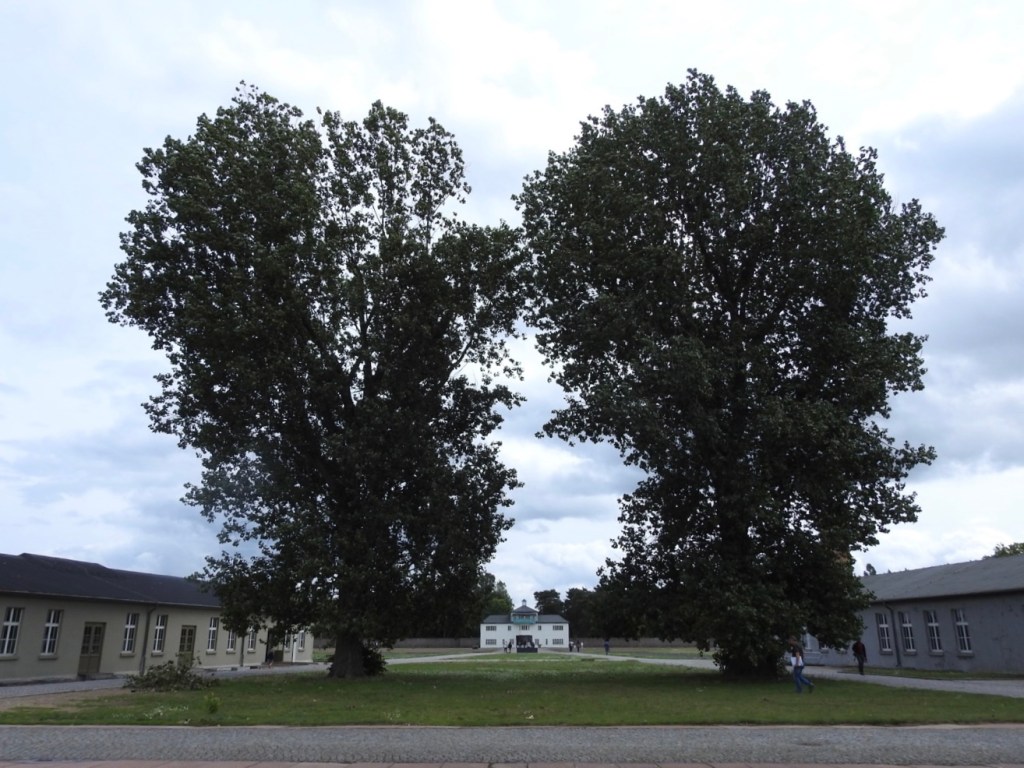
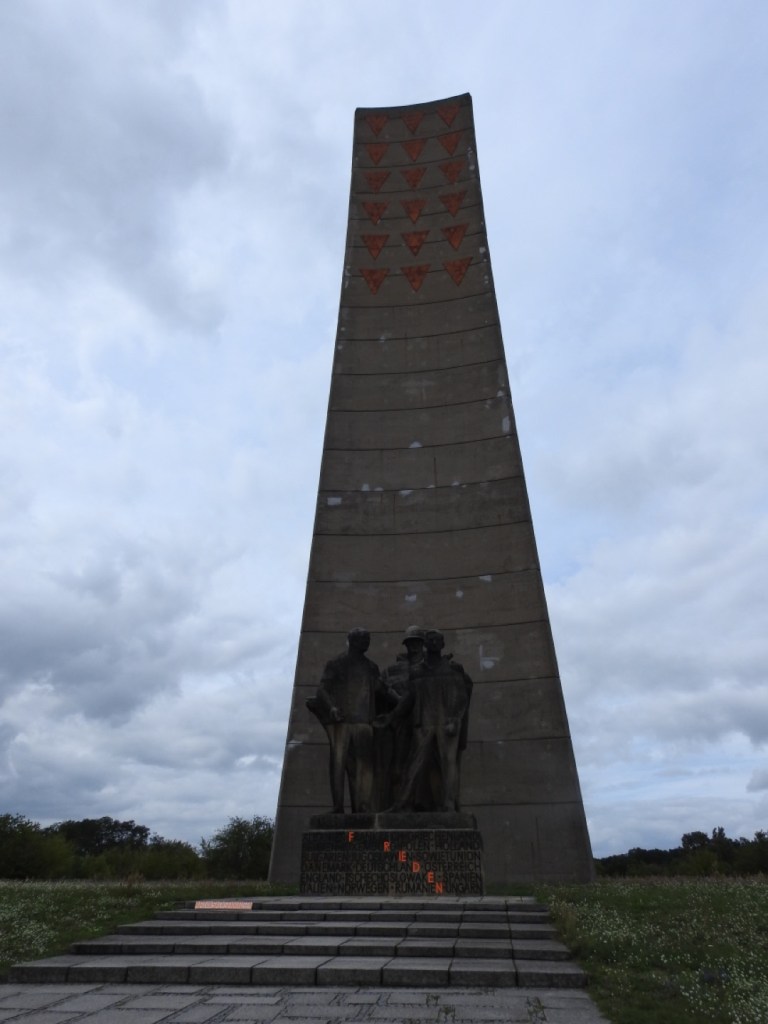
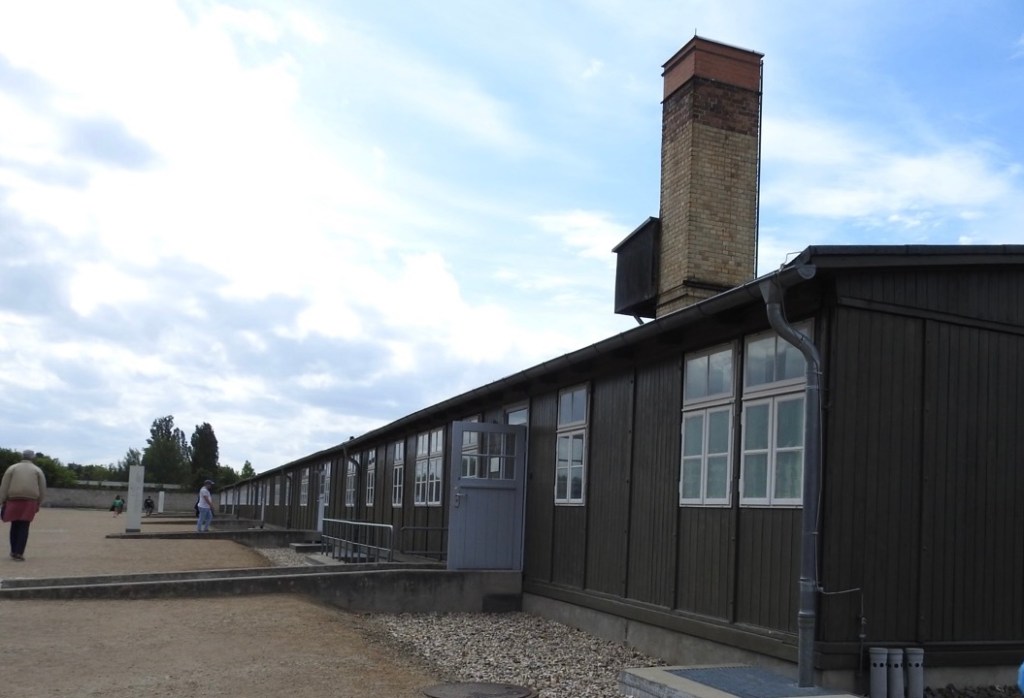

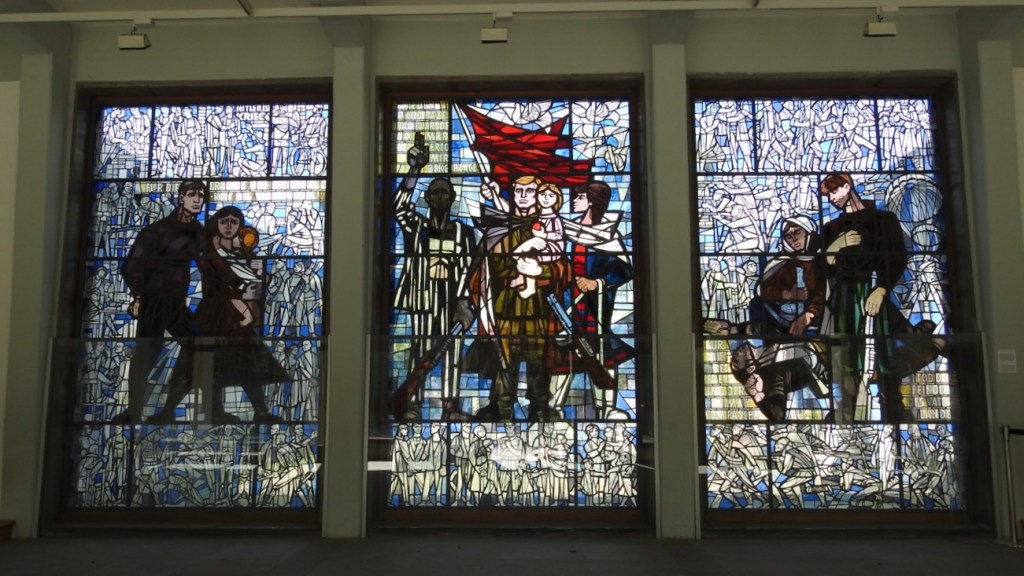
The day was both sad and discomforting, but not as bad as I thought it would be. Perhaps this is because much of the camp was dismantled and disposed of, making it a mental exercise to imagine what it looked like. They have done a good job in presenting the camp site as a memorial, so it is not hard to imagine what it was like. I can’t say I enjoyed it, but I’m glad I went. I don’t need to go to another. God bless the living and deceased Jews. May we never see the likes of the crimes perpetrated against them happen again.


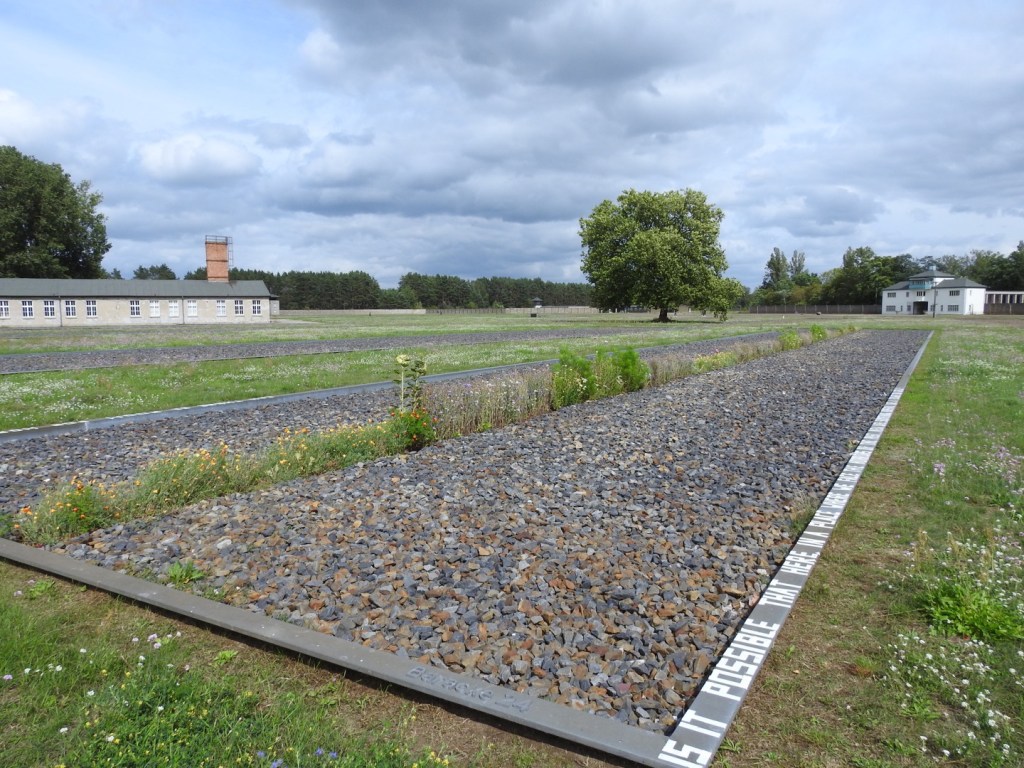
After arriving back in the city, we stopped at the local pub for a couple of beers and some authentic German pub grub, before wandering down our street to home. I am always grateful for my bed. I say hello to it every night and tell it I love it. I loved it especially much tonight. I don’t think I would have survived for even a few days in a concentration camp. I would have succumbed to something and died simply because of a lack of grit. I have no idea how people lived in those conditions. They were beyond resilient. It is for them that the saying Rest in Peace has particular meaning.
Tuesday 8th August (day 9)
Today is our last day in Berlin. They seem to have gone a lot quicker than they did in Prague. I have loved visiting here and will be sad to leave. But first we have today.On Sunday we did try to go to the DDR museum of “everyday life in pre-unified Germany showcased in a museum of interactive exhibits”, but being museums-are-free day and raining, there was a queue, so we didn’t get to go. However there is a similar “cultural museum with exhibits illuminating the daily lives of East Germans in the 1970’s and 1980’s just down the road from us at the Kulturbrauerei (Cultural Centre at the old brewery). So if decided to go there, and it proved to be a good decision. We were there for well over an hour and came to understand how the soviets controlled the people. Initially they bought up all the businesses, then created high demands on each factory or other establishment to produce loads. People working. There were rewarded financially and otherwise if they worked harder or produced more. Each factory or establishment kept a book, brightly cataloging everything, which was reviewed and further rewards were issued as appropriate.
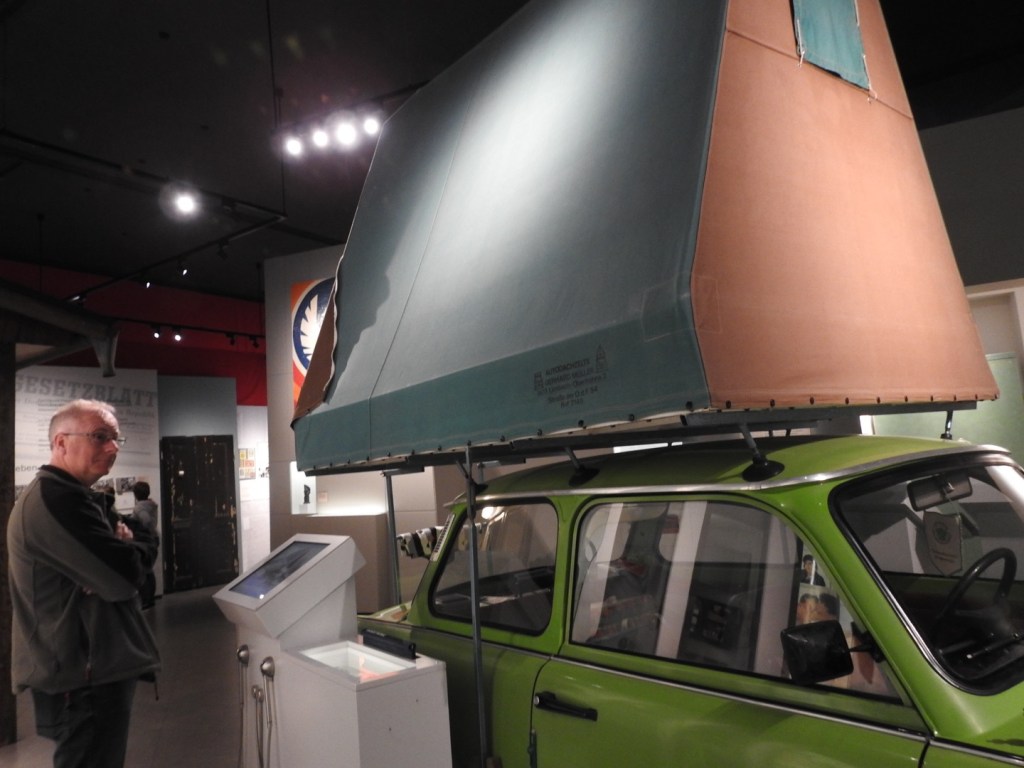
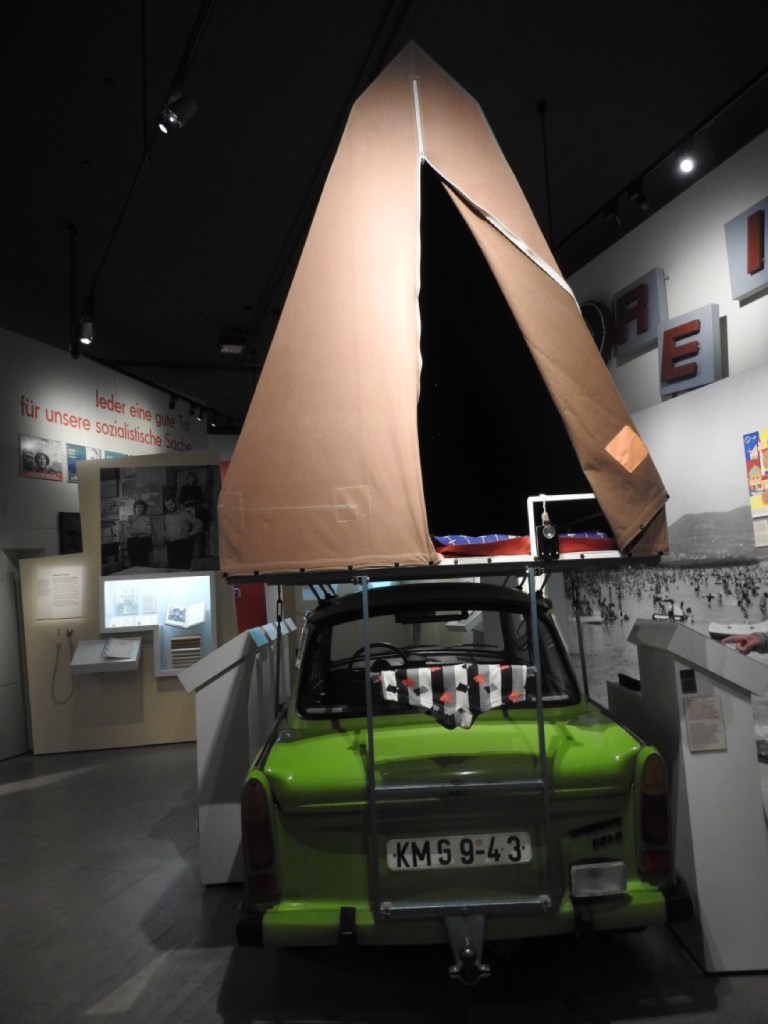

Then, factories started creating sports and other clubs, so workers worked and played in the same place, with the same people. Then they created daycare and doctors surgeries and outpatient clinics in the factories. They even had holiday sites were the best workers could apply to spend some time. Almost everything people needed was at work, a perfect place to socialise them! Then to top it all off, the things they made were exported out of East Germany! If they wanted to buy them, things like fashion or televisions, they were exorbitantly expensive. Of course this created undercurrents of discontent and we all know how this ends. But not before an ingenious inventor makes and then produces a rooftop tent for the trabant! They were that popular, he couldn’t keep up with the production requirements! The museum and its exhibits and information were excellent, free and uncrowded. We would highly recommend a visit to this excellent little museum. I’m not sure if it’s all any clearer, but I understand the chronology and events at least …
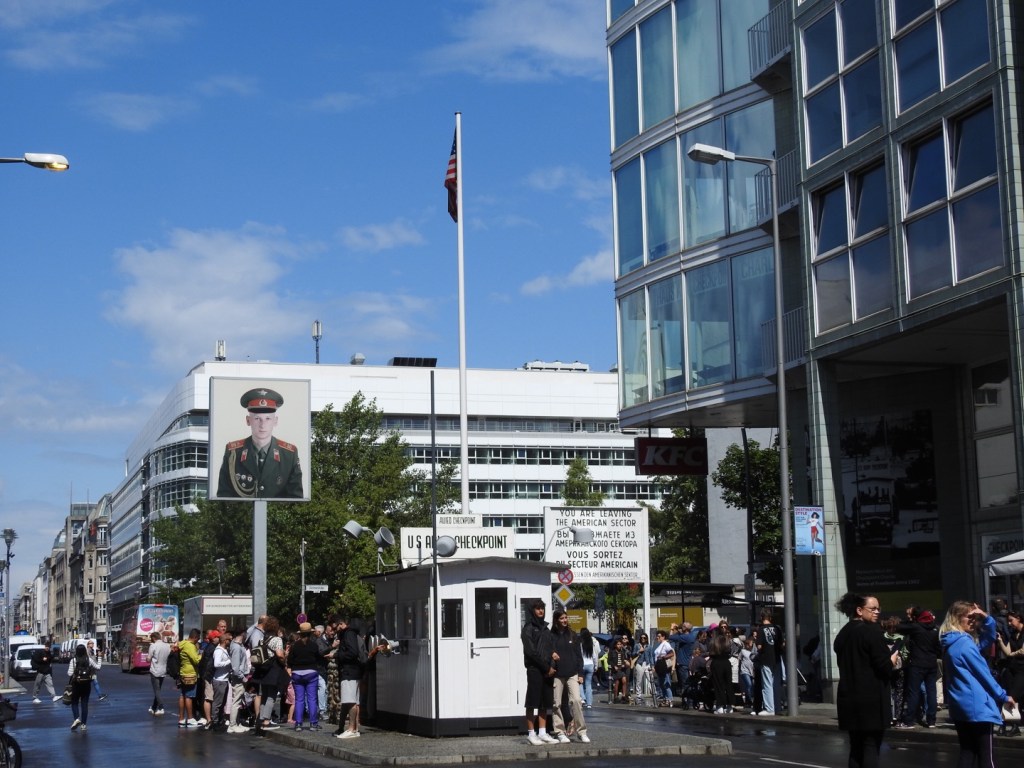
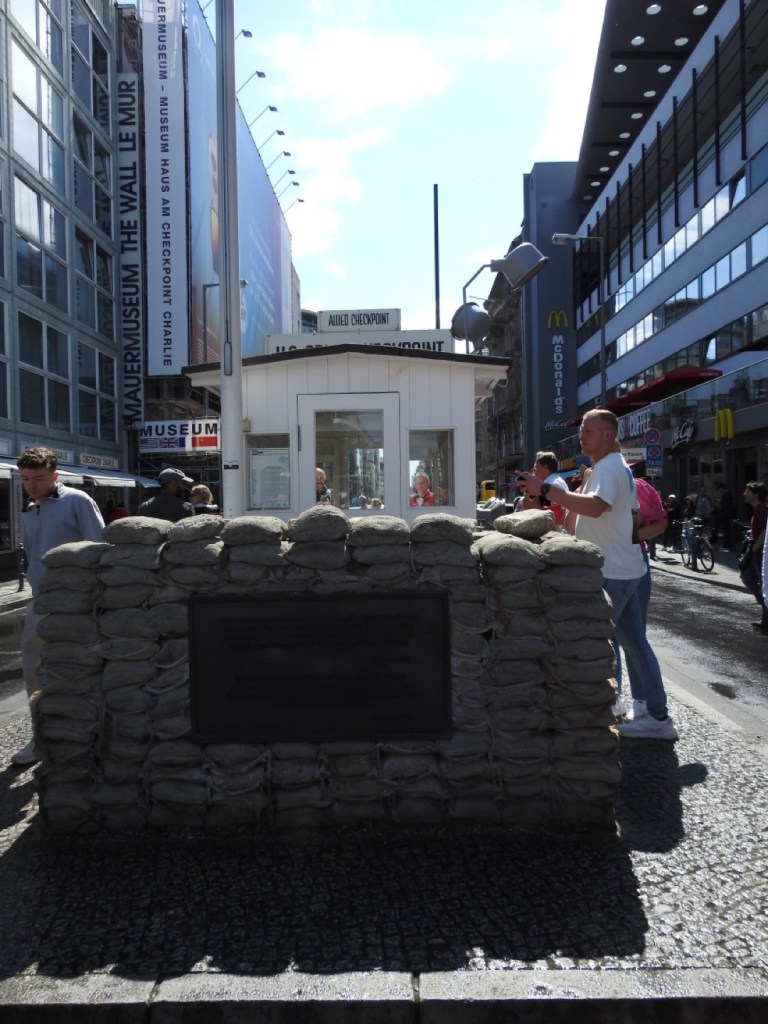
Our next stop for the day was a very quick skip past Checkpoint Charlie, just to say we have been there. It was very busy, with little chance to get a photo without a million photo bombers in it.
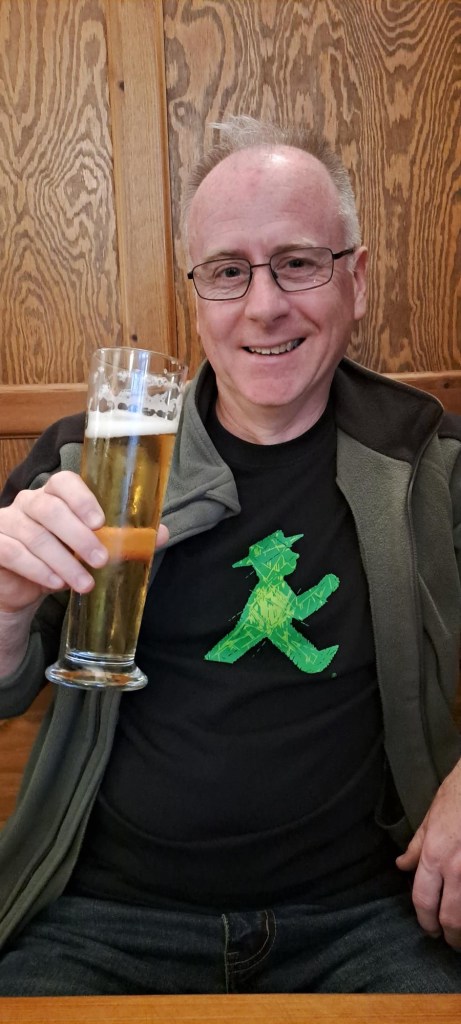
Needing coffee, we headed over for a very nice cup and a huge toasty sandwich at a local cafe, where we got in a call home to Evie! All full up we decided to head to the Ampelmann outlet store where Green Hair Man bought a t-shirt with the go symbol on the front and the stop symbol on the back, and I bought Ampelmann earrings, a go symbol in one ear and a stop symbol in the other! Too cute.

Our next stop was the Brandenburg Gate for a very very quick selfie before the heavens broke and we went running into the Adlon Hotel for a very expensive coffee. Jimmy was obviously being facetious when he said their coffee was cheap! I don’t think he was lying when he said it’s the hotel where MJ hung his son out over the balcony. Anyway, we stayed dry and hatched a plan to finish our day with an ascent at Panoramapunkt at the Kollhoff Tower. It’s become a bit of a ritual to start a city with a tour and finish it at the highest possible peak.The tower is centrally located at Potsdamer Platz, so we walked there, arriving in plenty of time.
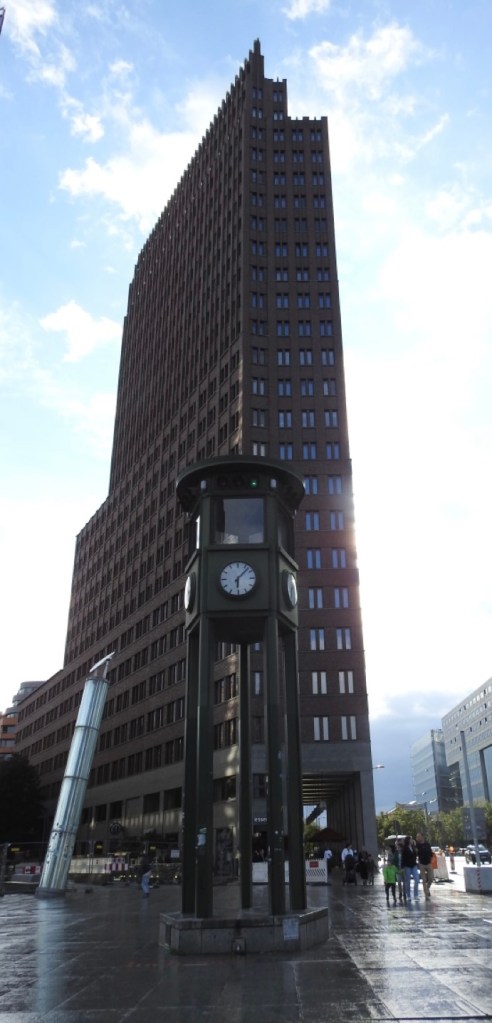
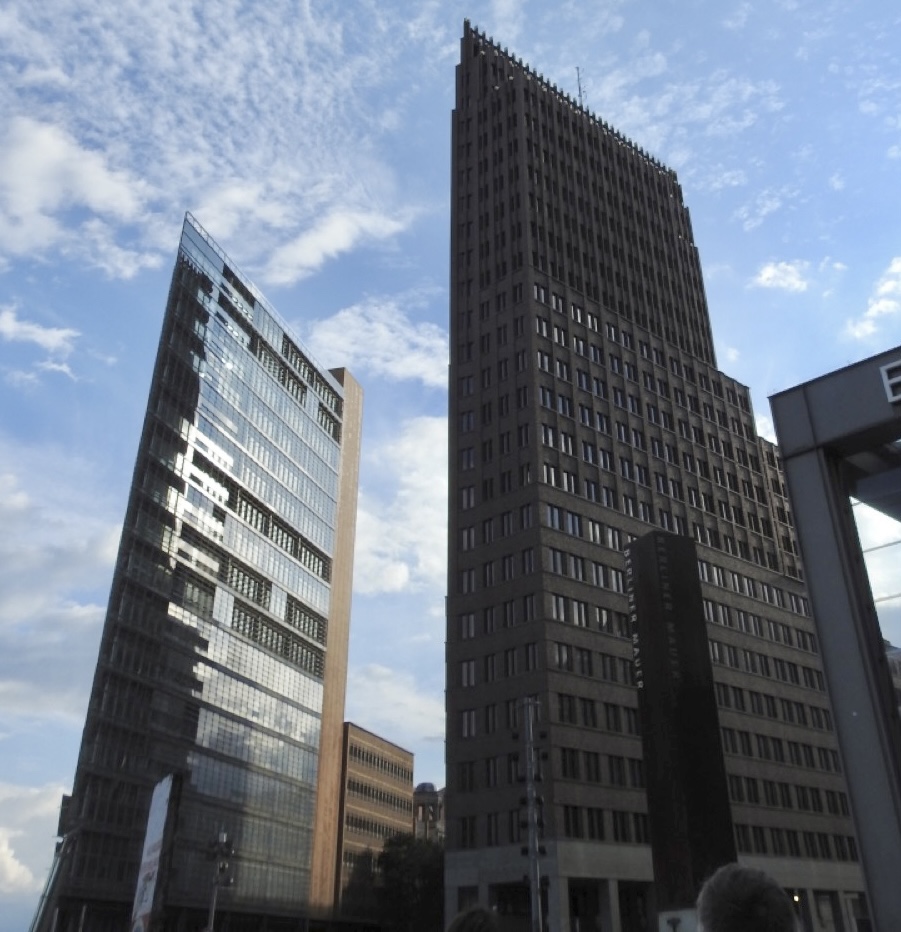
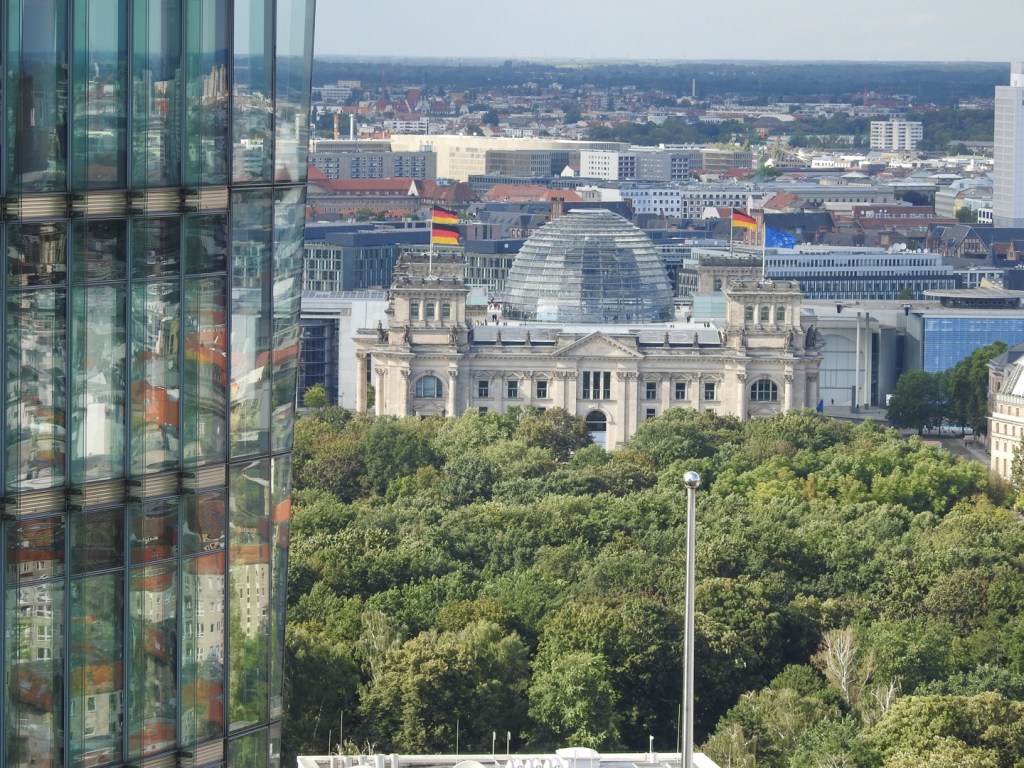
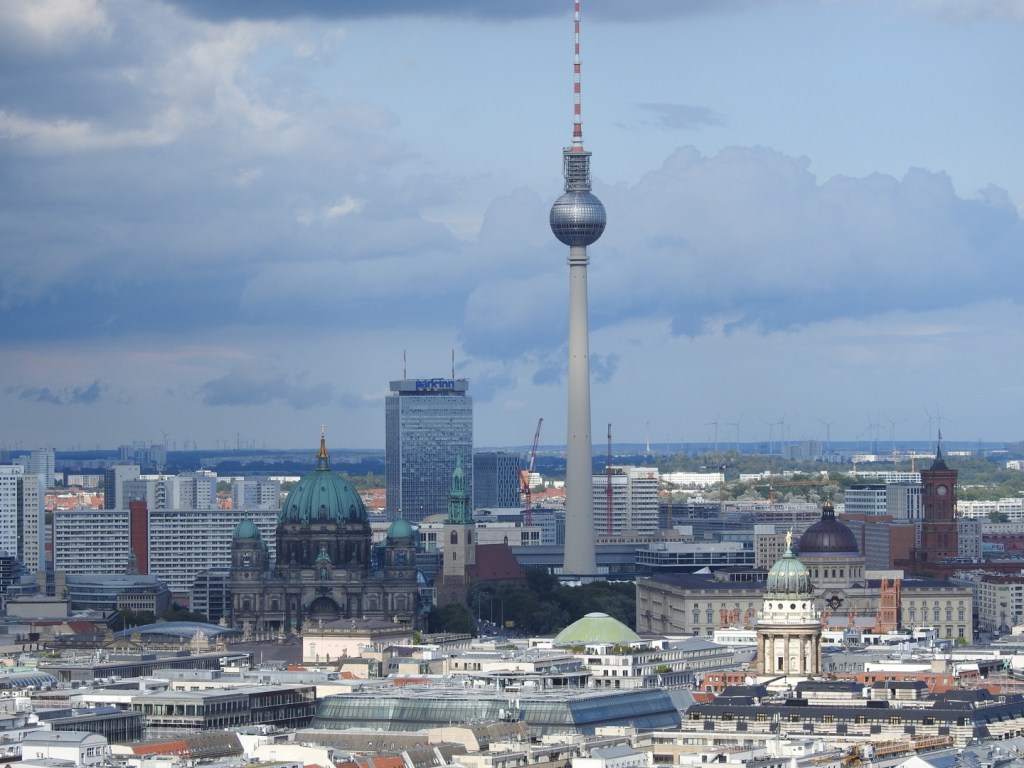
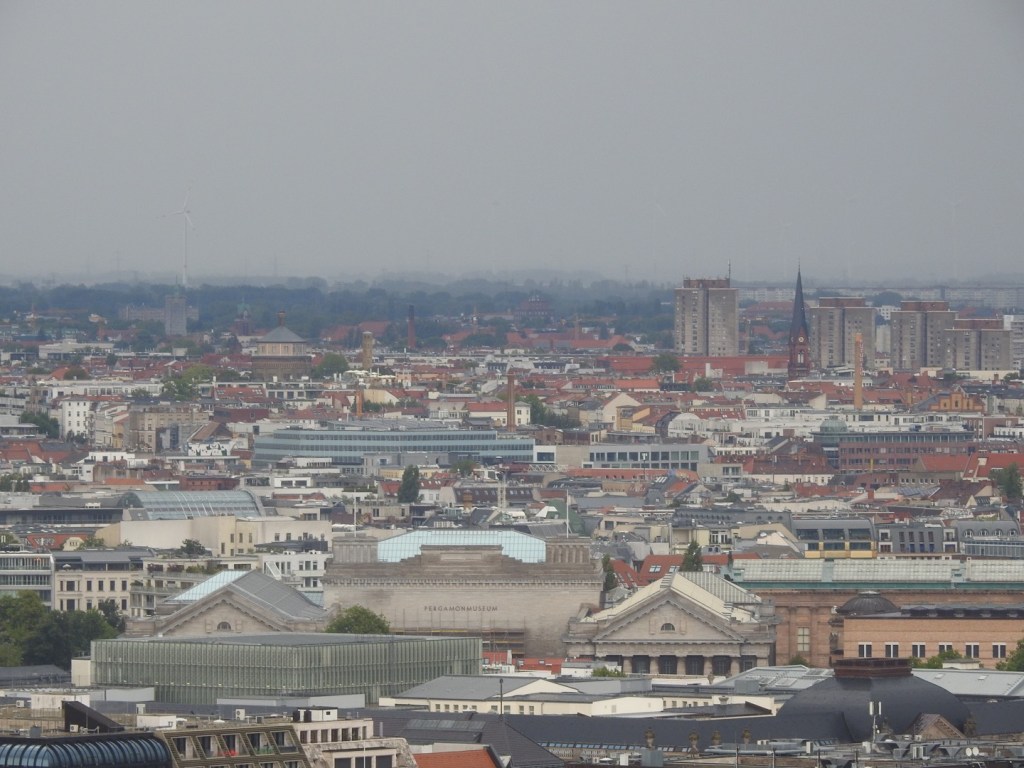
The tower boasts the fastest lift in Europe, 24 seconds to ascend 90m. Scary, but I will take one for the team. At the top, we had a wonderful view across the city scape and back to “our house”, between the water tower and the church! We could also make out the Brandenburg Gate, the Berlin Cathedral, the holocaust memorial and the Reichstag building. As we wandered around, it was soon obvious there was going to be a big storm, so we found a protected spot and hung out while the thunder, lightning and rain passed over. As soon as it went, the sun came out, and with it a huge rainbow, straight over our house! A great way to end a great few days in a great city!
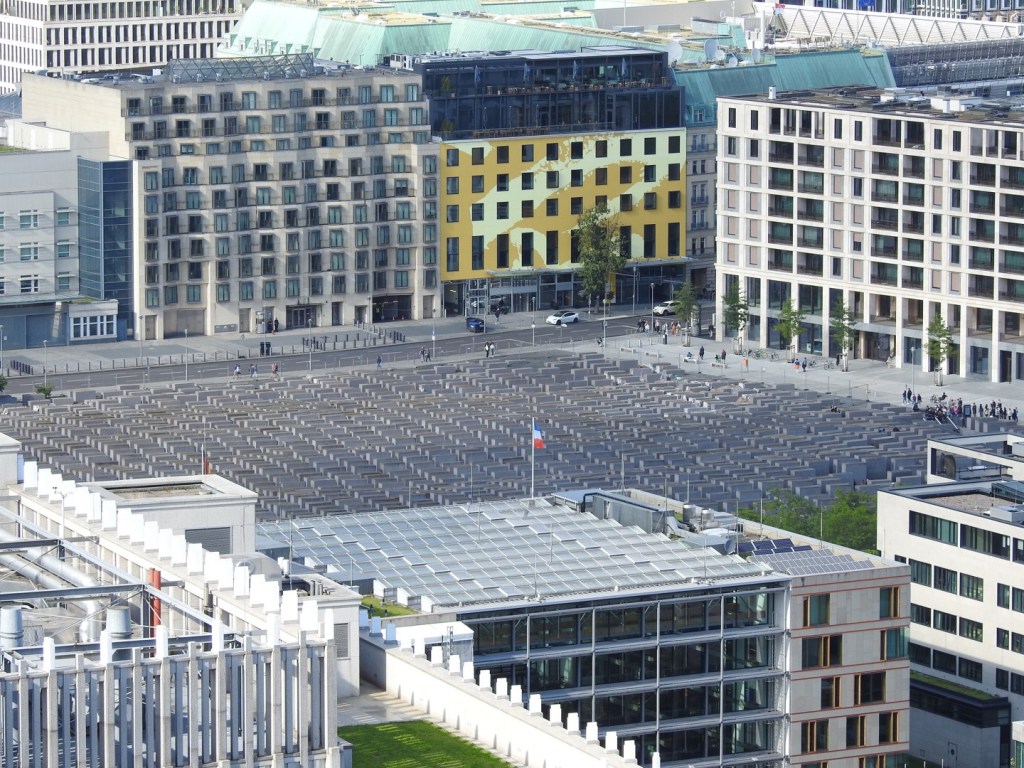
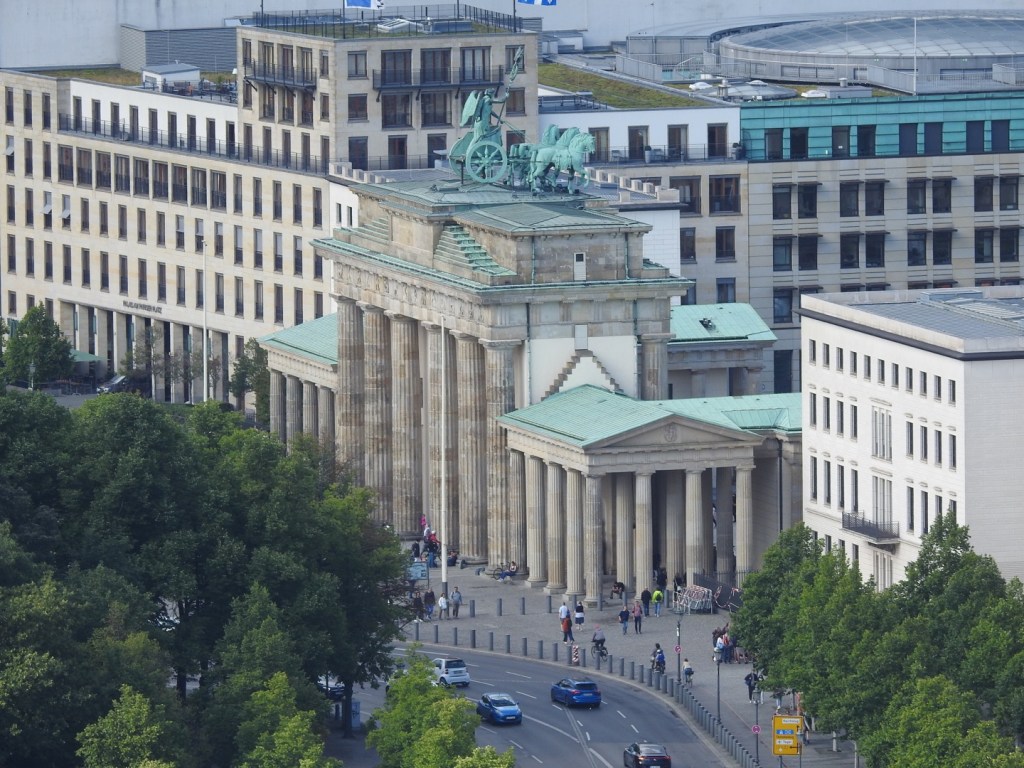


Back at home, we put the last of the pins in the map. When we came in on Friday we pulled them all out and at the end of each day we poked them in to places we had visited. We had just enough pins for the places we went, including all our Happy Hour spots.
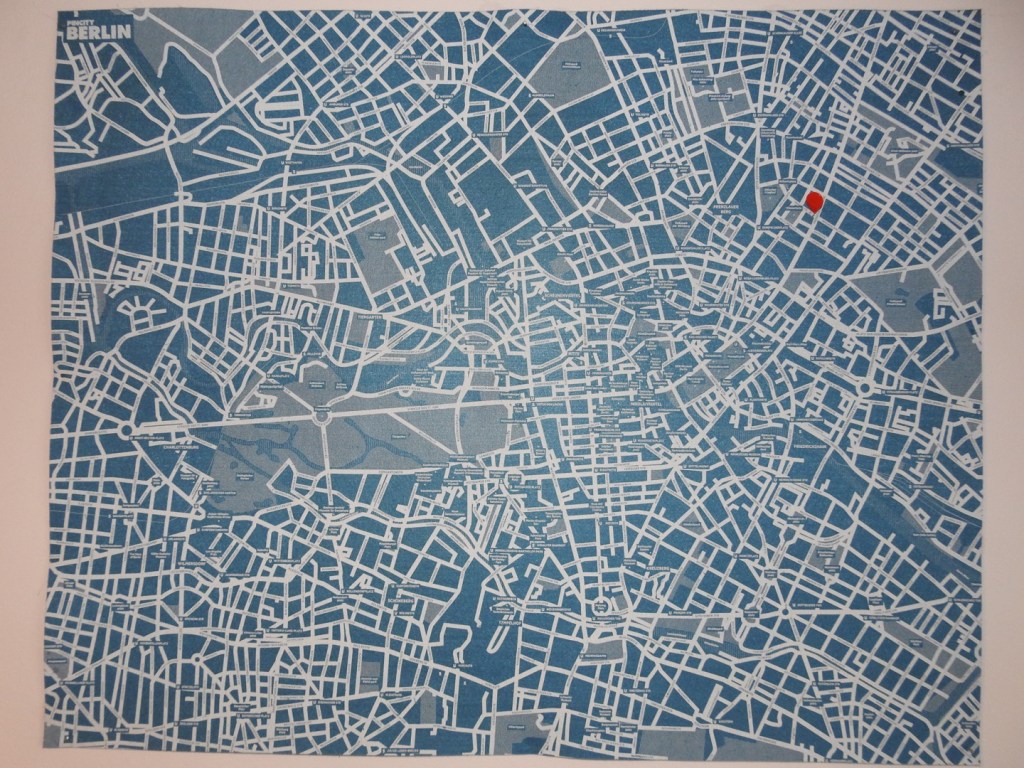

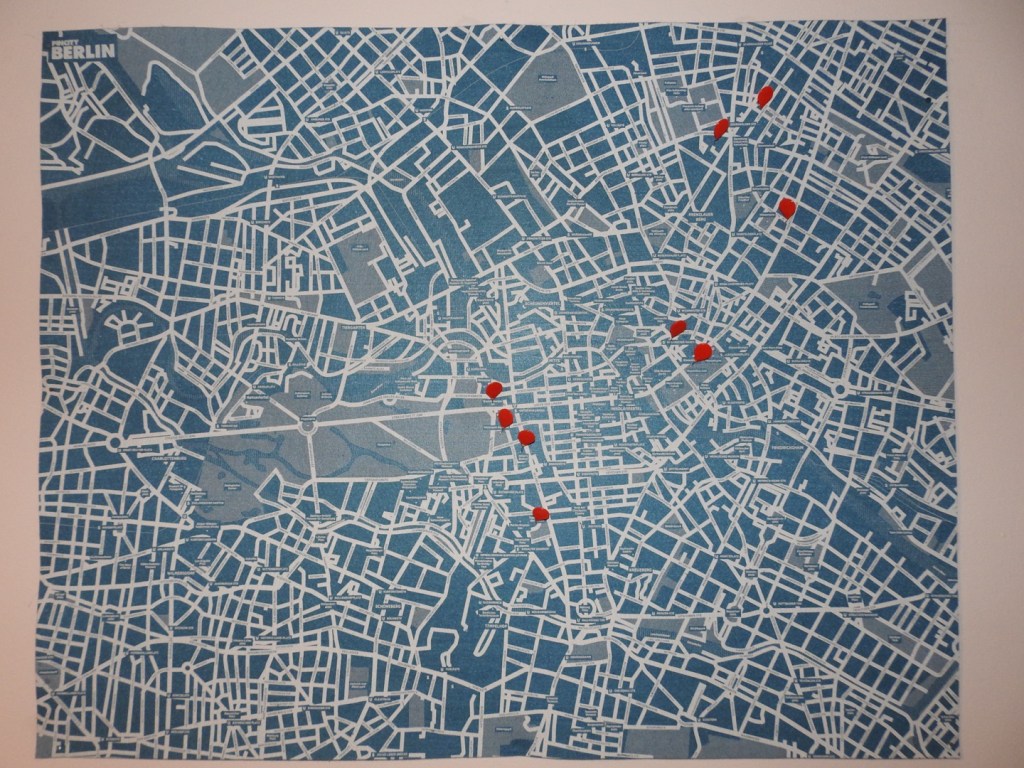
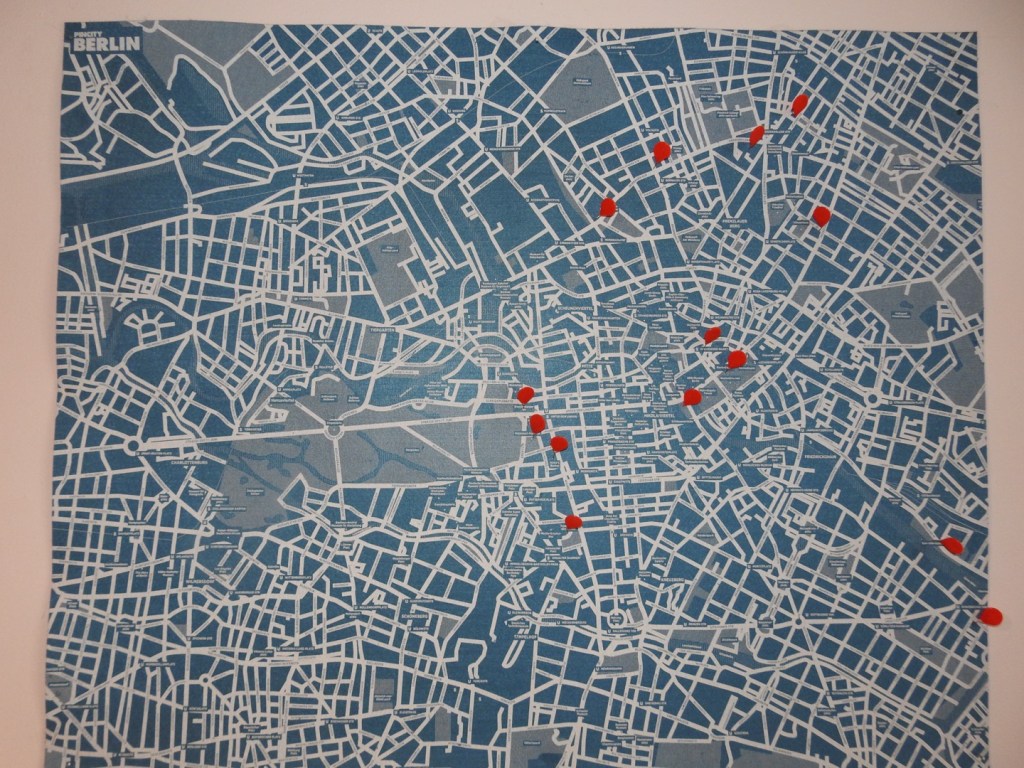
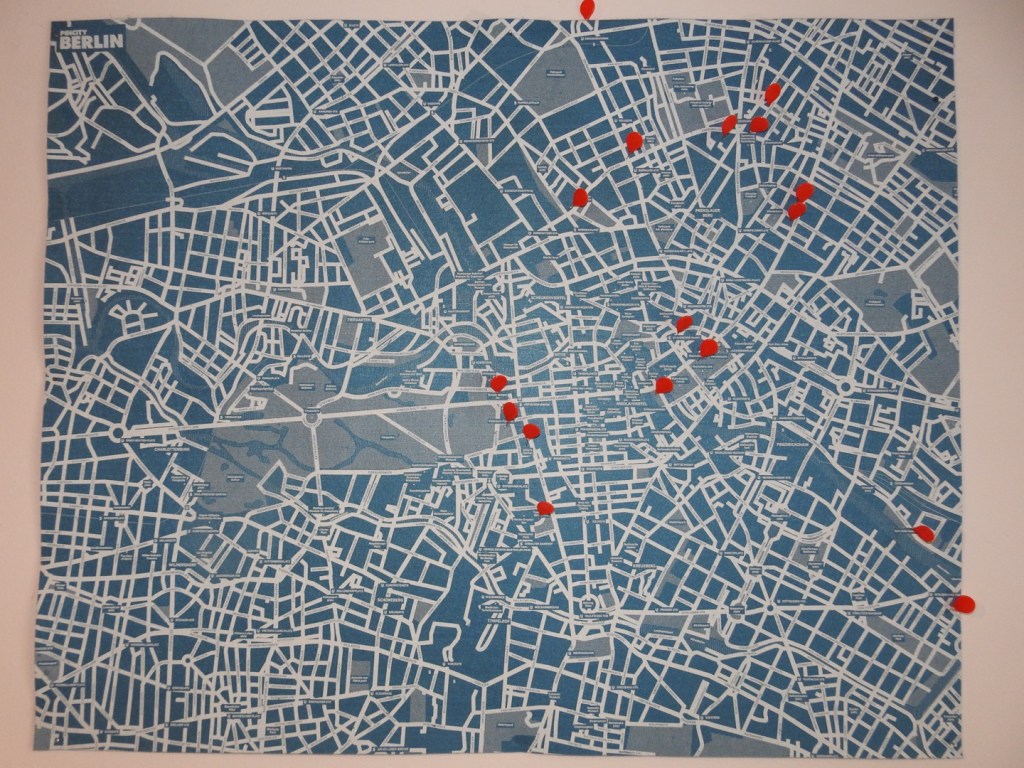
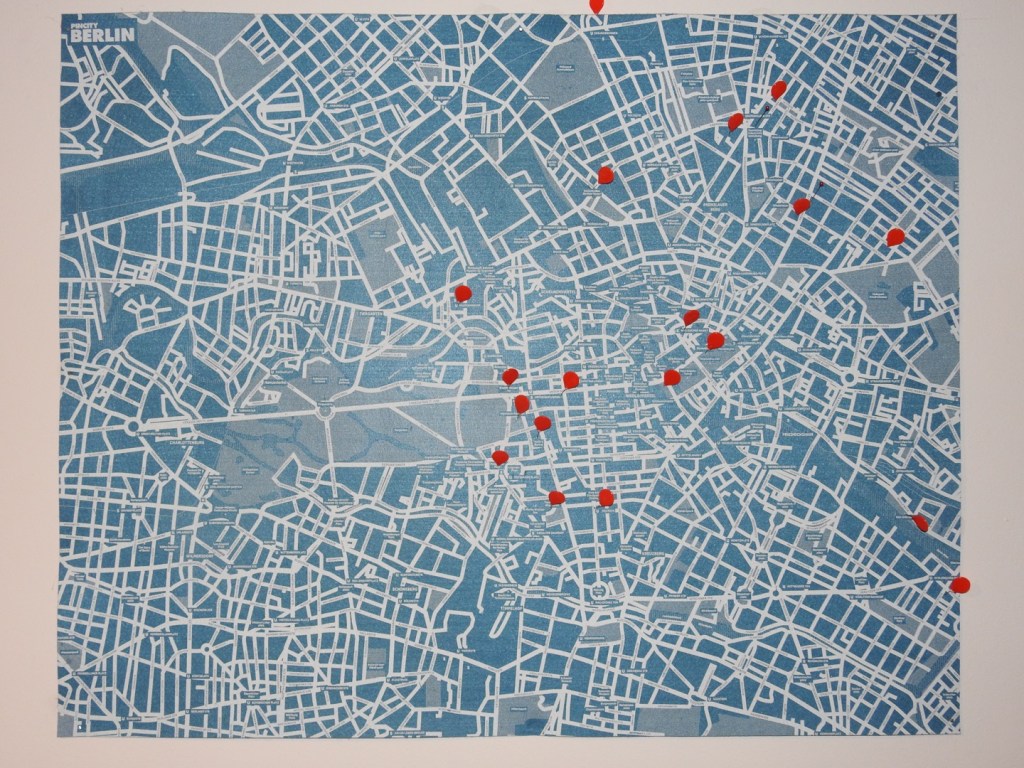
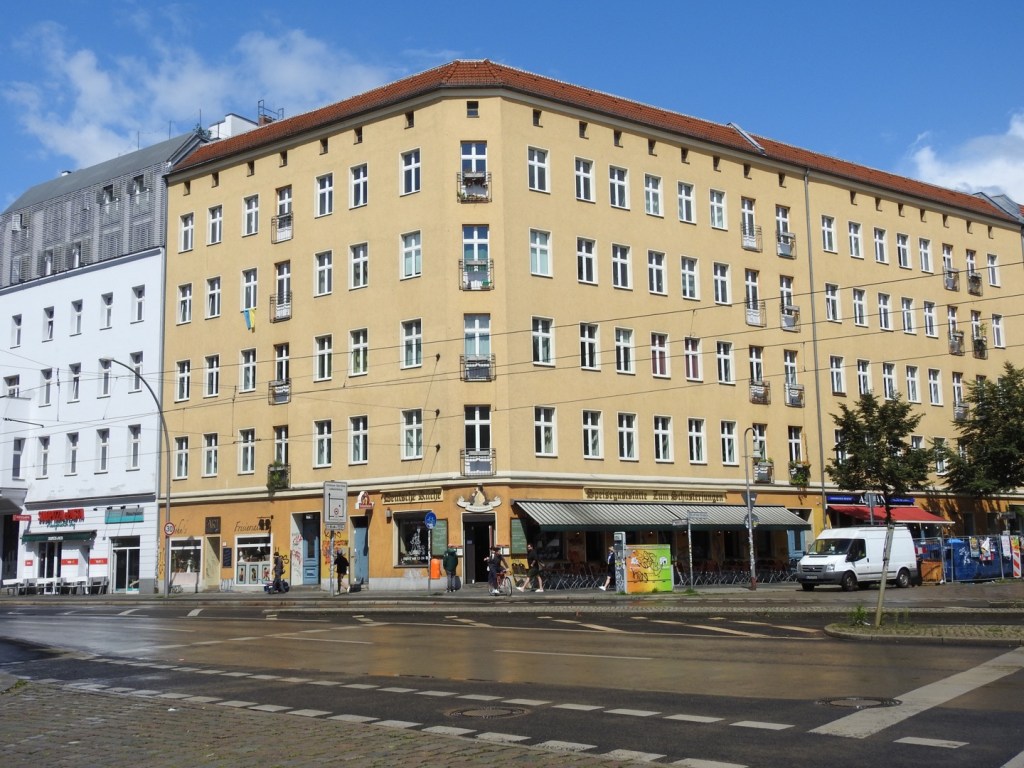
On that note, we can recommend Dirty Velvet and Zum Schusterjungen, both in Prezlauer Berg. There are a few others we went to that were good for beer, but maybe not the best atmosphere or views.
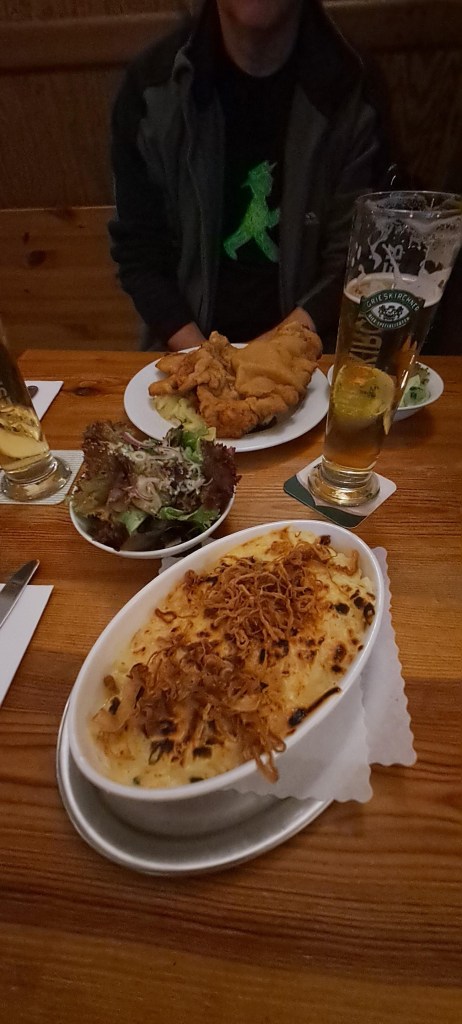
As for our Best Things About Berlin, I loved everything to do with The Wall, and Green Hair Man loved Ampelmann. So much so, that this is going to be his new name. Ampelmann says Go!
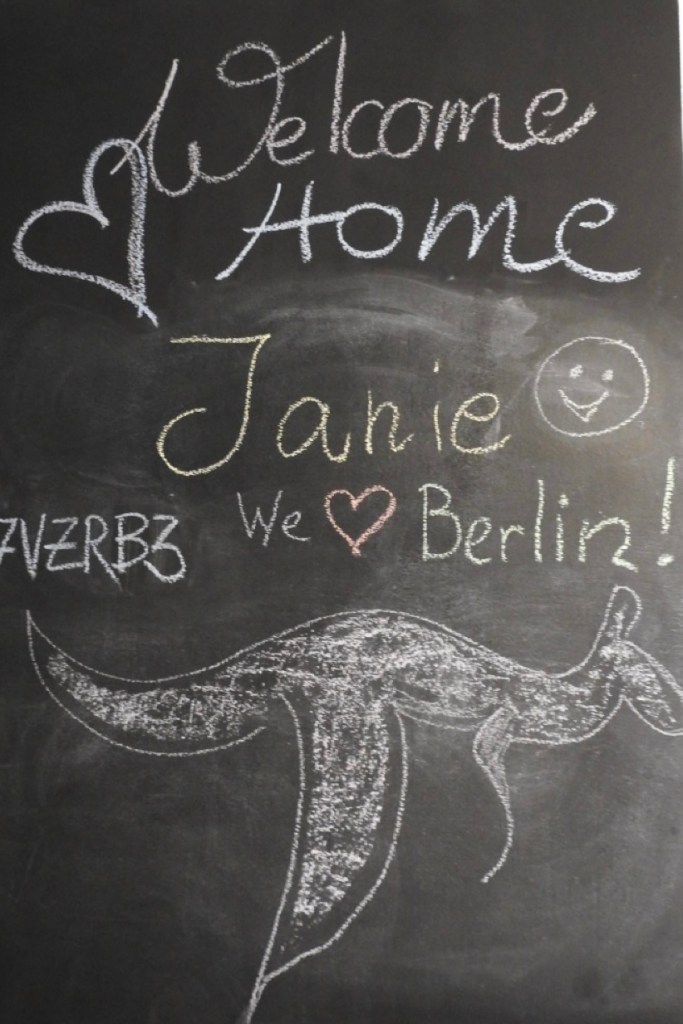

When we planned to come here I just wanted to see The Wall. That’s done, and there is one less thing to do on the Seventy B4 70 list. But Berlin gave us more than just the wall. It is a fabulous city, that I have come to love. It was East and West Berlin, and was probably at risk of becoming more like one or the other following reunification. But it didn’t! It’s just Berlin and it’s a great place to spend a few days, learning about the world’s history. My grandfather went to both WWI and WWII, and 2 of my uncles went to WWII, all as English military personnel. The stories I heard painted a picture of “The Germans” that is different to my experience. It’ll take a while to process, and to rewrite the narrative in my head, but where better to start than the city that played such a huge part in it all. I am looking forward to exploring the whole of Germany some day. Until then, We ❤️Berlin, but we’re off to Amsterdam …
 The Solo Avocado